Girl's Girl

I’m a girl’s girl at my core. Female friendships mean the world to me, and one of the coolest parts about getting older is adding ‘cheerleader’ to my resume. Meeting and following women who are starting companies is one of the cooler parts of this stage of life. I’ve had the chance to work in the women’s health space professionally, supporting the development of hospital-based programming for women at all stages of life. I was in my early 30s at the time, and ‘midlife’ felt far away, including the health changes and challenges that come with getting older. As I'm seeing the women around me not only grow, but all go through their own unique life transitions and choices, the importance of health is becoming wildly obvious—to show up for your community, and to be well enough to stay rooted in yourself while the world starts moving at a million miles per hour. There’s so much I can say about women’s health overall, but this post is dedicated to highlighting some of the very cool women I’ve had the pleasure of getting to know in the last few years, all who have pivoted, started something, and create momentum in their own lives while reaching the wild ‘middle’ stage of life. There’s nothing wrong with not becoming an entrepreneur, it’s truly awful at times. But as someone who has recently dipped my toe in, I’ve come to appreciate the women around me who have done the same.

A few amazing women and the companies they’ve created, just because:

Elisa
Not only is she a business owner, she’s an immigrant, a mother, and a category-builder. She wanted a space for midlife women to connect in real-time, in a supportive and organic way. Retreats existed already, but Elisa saw a gap for midlife women and women who were looking for something beyond the travel agent experience, something like her experience as an Italian, lingering over long dinners and shared adventures during summer holidays. She left a comfortable corporate job to ‘plan retreats’ and hasn’t looked back, which in itself is inspiring beyond measure. She brings Italian hospitality and obsessive attention to detail to make each retreat feel like it was custom-designed for every person, because it is. Her retreats are milestone events, the types of trips that linger years and years after they’ve ended, and with built-in community that follows you after you’ve arrived home. I’ve known her since attending one of her retreats, and continue to admire the risks she takes, and the nets that appear to catch her each time she puts herself out on another limb.

Andrea
Founder and owner for one of the largest and OG fitness platforms, long before social media and virtual workouts. I had a CD of one of her first workouts which I leaned heavily on during the early months of COVID when gyms shut down. A year later, she hosted a retreat which I gifted myself for my birthday. Her vision wasn’t just to share fitness, but to build community, something that I’m noticing is a theme with these women founders, and might be the key to entrepreneurship in modern day, always-on life. A lifelong dancer, she understands the value in teams, and as a former soccer player, I very much miss the camaraderie that comes with doing difficult things together, daily. The retreat felt like being at summer soccer camp, but with much better food & outfits, in the best way. Naturally, her retreat was hosted by Elisa, above, and is where I also met Jane, below. Likeminded women founders find each other one way or the other ;)

Jane
Related to Andrea’s story, I met Jane on the same trip, she was a fellow retreater and we quickly bonded. She’s down to earth, vulnerable, and overall a great example of what it means to be a woman chasing her passion. She’s also an immigrant and mother, and instead of taking what is probably a ‘safe’ route of corporate life after immigrating, she listened to what she knew she could do, and was best at. Her company doesn’t fit into one category, it’s part fashion house, part styling, and huge part community-building. She plans events to bring women together and learn about the history of the large fashion houses, the designers, and the impact they’ve had. Her events consistently sell out and prove that there’s value in bringing people together around a common interest. I’ve used her as a stylist, and can say she’s as professional, bold, and precise as you’d expect, while giving an approachable, welcoming face to the traditionally standoffish fashion community.

Samah
The girl is a powerhouse, visionary, and recent business founder with energy for days. I had the pleasure of designing the brand for her bookstore, which I learned was a lifelong dream of her and her family. She showed up week after week over the course of the six months we worked together, sometimes at home with her kids in the background, sometimes at her desk between classes (she’s also a school teacher), and sometimes in the car en route to unplanned family events. She made entrepreneurship happen with focus, planning, and taking a risk, including on working with me. Her bookstore has the cutest story, and is solely focused on being a space for connection and getting back to the basics - reading, crafting, and connecting. She’s the poster kid for following a dream, and having your energy and belief in the idea be all the marketing that’s required. People love to support enthusiasm, and as an entrepreneur sometimes that all you’ve got in your bag that week.

Melissa
An entrepreneur from the start, this girl co-founded and owned one of Metro Detroit’s most in-demand salons, and after having her own kids decided to add “healthcare entrepreneur” to her CV. She wanted a space where expecting and new moms could rest, bring their newborns, and feel safe in a space designed uniquely for this stage of life, and so she dove head-first into the complex world of healthcare without an prior experience. I had the opportunity to do contract strategy work for the company, and was blown away not just by the space and business model, but the real culture built there. I like to believe it’s from her salon roots - one of the other ‘sanctuaries’ a woman has to connect and recharge. Melissa understands that wellness isn’t just in the postpartum support women can certainly receive while remaining at home, but in the connection with community and its effects on mood, health, and vitality. She brought two seemingly unrelated concepts together to create a truly unique model and space, and excited to see how it evolves.

Diana
I worked with Diana when I was a strategist at a West Michigan hospital system, and she and I formed a quick connection. She’s a true entrepreneur and advocate for women. Her business started as an idea long before I met her, but I got to see firsthand what it takes to not only bring a vision to life, but methodically advance an idea through the right stages to ensure longevity and credibility. True. isn’t just a women’s health practice. She built a community long before the ‘influencer’ model, built on grassroots and word-of-mouth momentum. She designed stopgaps and diversified solutions to her medical practice before it was trendy: she published years-long research studies, developed products, and trademarked what she knew would have longevity. She showed up day after day, even when the news wasn’t in her favor, and the research hadn’t caught up yet. I respect her for having vision, but mostly the discipline to show up again and again for a topic that, in 2017 when I met her, was still hushed and overlooked. Today, midlife women’s health is an entire wellness category. She taught me that vision paired with discipline is the real unlock.
Spaces, part 2

I had the luck of my first job in healthcare being at one of the most well-known and respected healthcare organizations in the world. There are a thousand examples of how I witnessed excellence during my time at The Cleveland Clinic. My days involved lots of meetings, and one thing about working in a hospital is that it’s often scattered across the medical campus, and in the case of the 173-acre Cleveland Clinic Main Campus, this meant an easy way to reach your 10,000 steps before lunch. Meeting and conference rooms are not centralized, and so there had to be commute time built in over the course of the work day to walk among the over 60 buildings. I personally loved this, with my walks giving me a chance to regroup, prepare and practice upcoming presentations, and let my mind and legs wander a little.

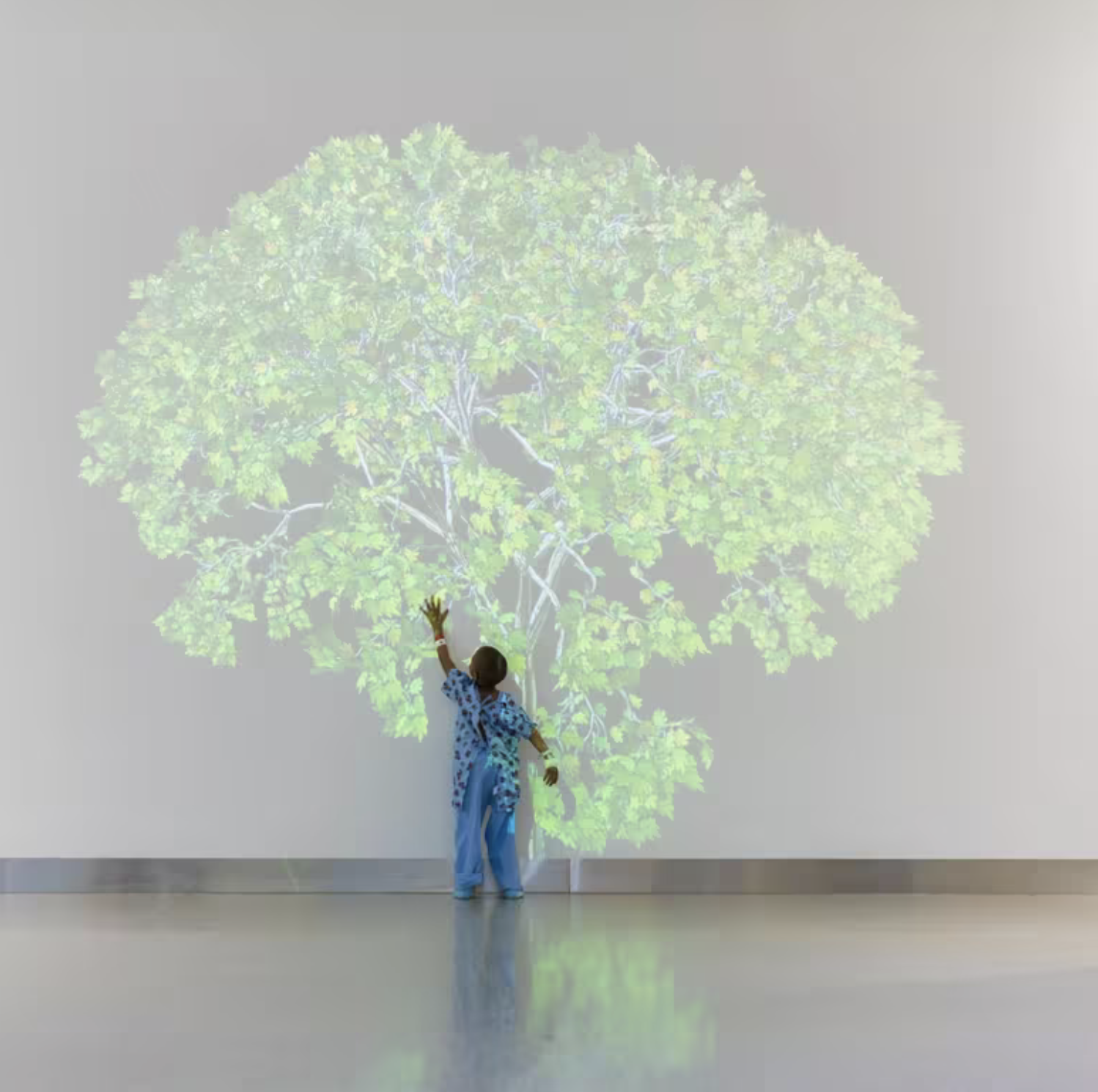
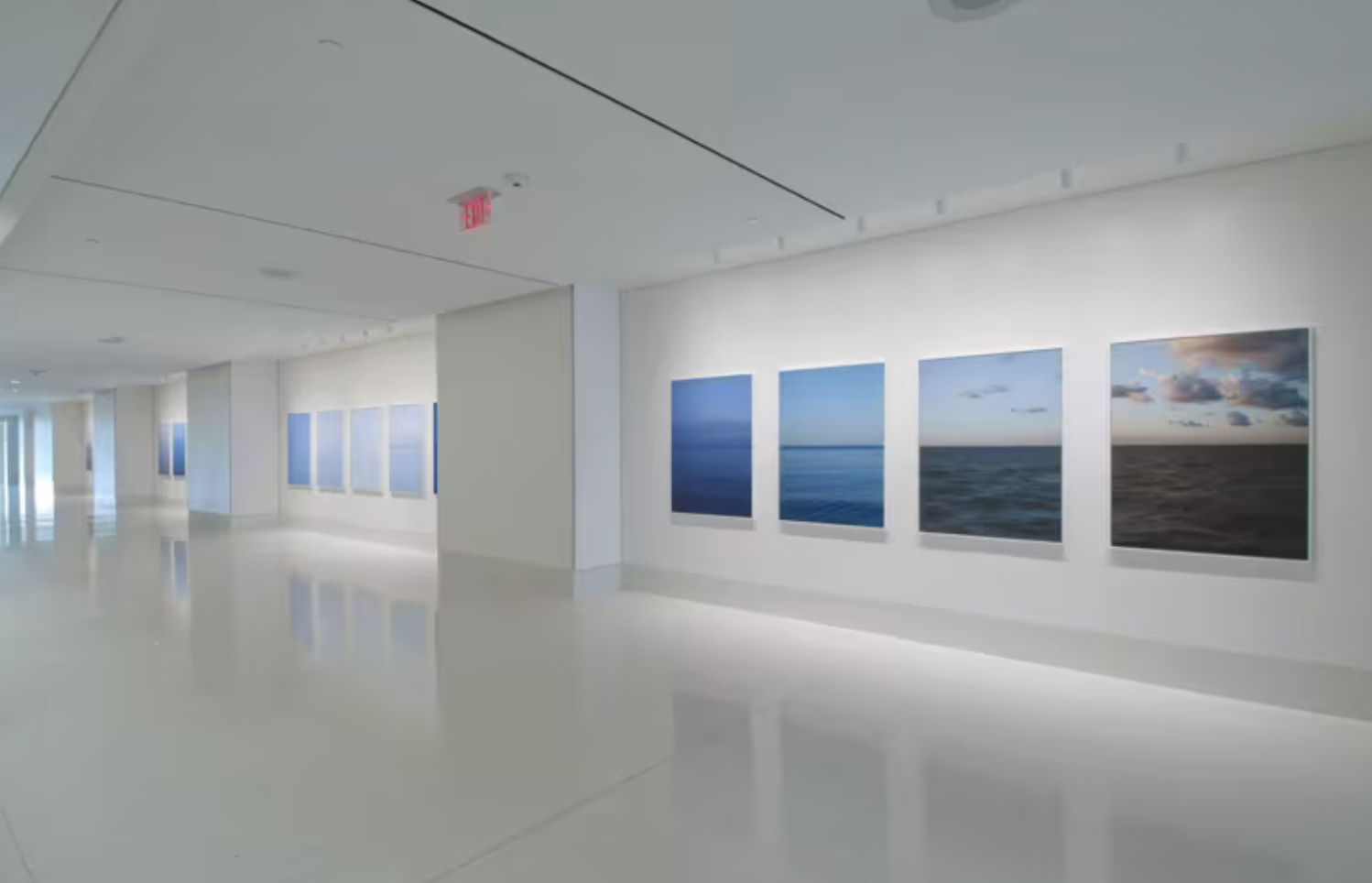
Perhaps the second most impressive feature, behind medical care provided here is the hospitality and environment itself. The hallways and community spaces feel almost....relaxing. As an employee, it was a place that I genuinely loved walking around each day, week after week. The architecture and space planning allows for maximum lightness, and remains open yet comforting, not at all heavy like the emotions that so many of its visitors must feel. It seems expansive, almost like a museum or gallery.
The Clinic also happens to house one of, if not the, the most impressive art collections in a healthcare facility in the world. It's impossible for me to even start touching on the thousands of pieces - including rotating exhibits - that adorn the white walls of the Main Campus where I worked. My twenty minute walks between meetings became a chance to slow down, maybe have a conversation with others looking at the same pieces, in a sense feel more human in a very easily overwelming and confined space.

The Arts in Health is a topic gaining traction, and many hospital systems have collections. The Cleveland Clinics, though, is the broadest and largest in North America. Much like the excellence in health care and its staff, the Clinic also aims for excellence in its environment: Part of the original plan for the medical facility in the early 1900s was the space itself, and a focus on employee creative expression. Modern-day leadership has continued this emphasis, and when starting his tenure as CEO, Toby Cosgrove mandated the walls be painted white, further enhancing the bright, gallery-like atmosphere. The Arts & Medicine Institute was started in 2008 to give a home to the vast art and programming collection housed inside the enterprise. Paired with the clean, open architecture, the space’s energy feels elevated, calm, and inspiring. I hope to see this kind of nonlinear planning and thinking underpin health and healing strategies across the board as we're finally seeing the data on spaces and their influence on healing.

Hospitals are actually often compared to airports, as both operate 24/7, with high-stakes activities, and a mix of visitors, employees, vendors, and an orchestra of behind the scenes moving parts keeping everything running. For those who are lucky to have never spent hours and days and months in a healthcare setting, consider the experience of a delayed flight. Airports that invest in the space are never more appreciated than when you are a captive audience. Suddenly that 'meditation room' is the best part of your afternoon (I’m looking at you, O’Hare), or sitting in front of a light show waiting for your phone to charge. In lots of ways, hospitals serve the same purpose, and it’s the seemingly 'unplanned' moments that make a difference when things don't go according to plan.

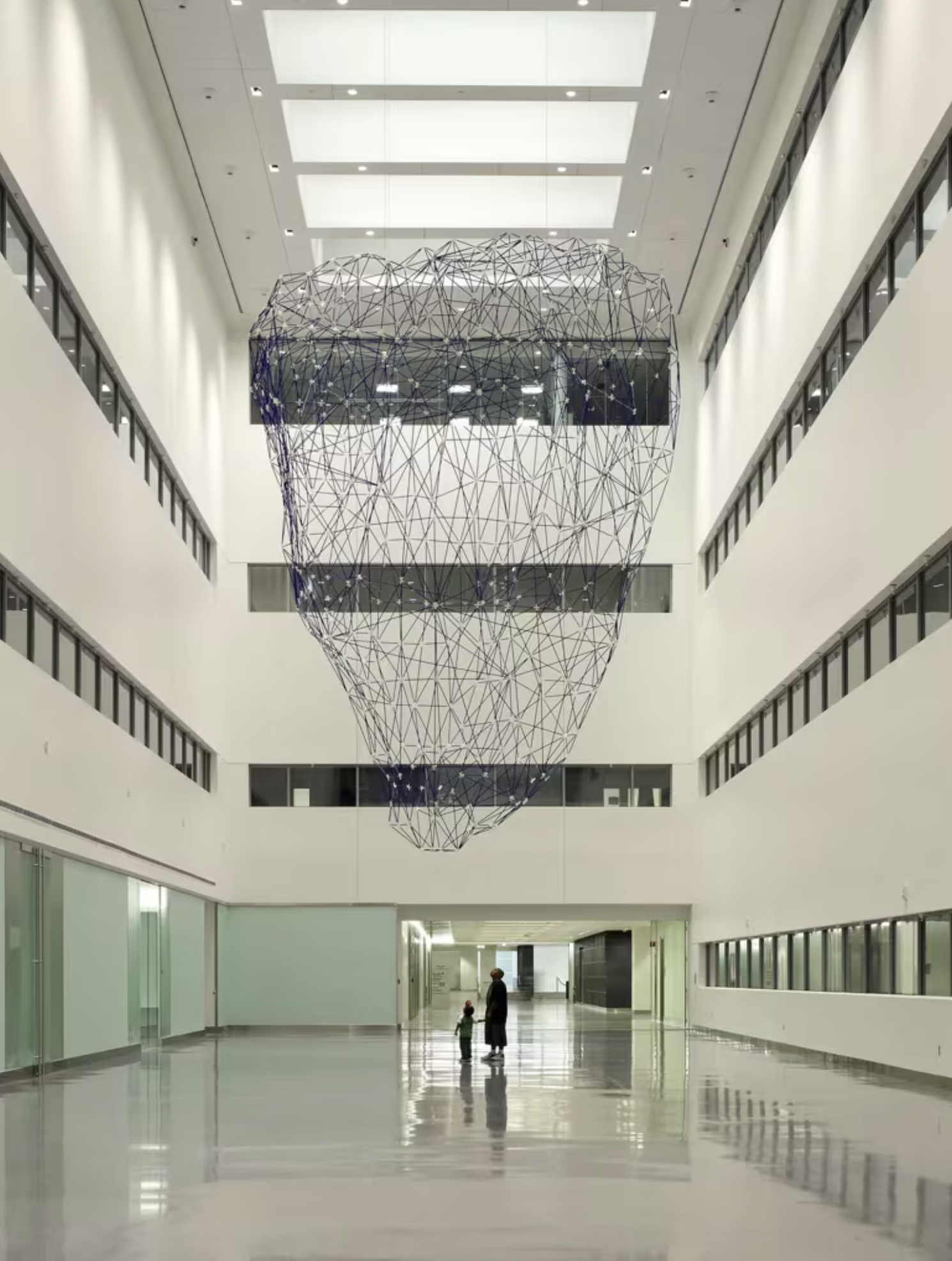
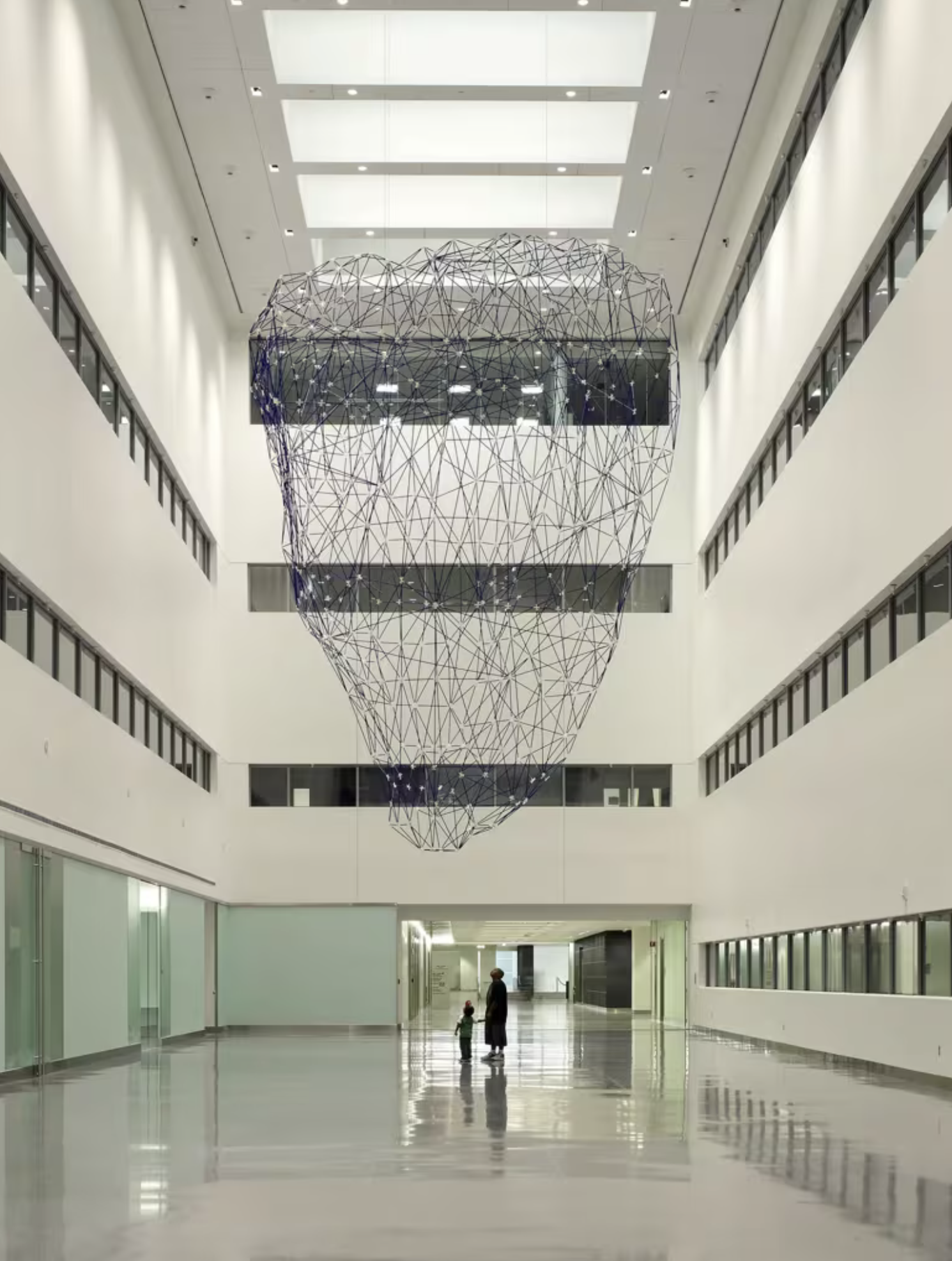
This sculpture and atrium was a favorite alternate office where I'd often come to work when I needed a change of scenery. Some people called it the Iceberg, but it was actually a massive wire sculpture of the heart, one of the top-ranked specialities at the Cleveland Clinic. It was an inspiring thing to do, leave my desk and wander the hallways, taking a break from the Excel spreadsheets and finding a clearer head, more capable and resilient than when I had left.

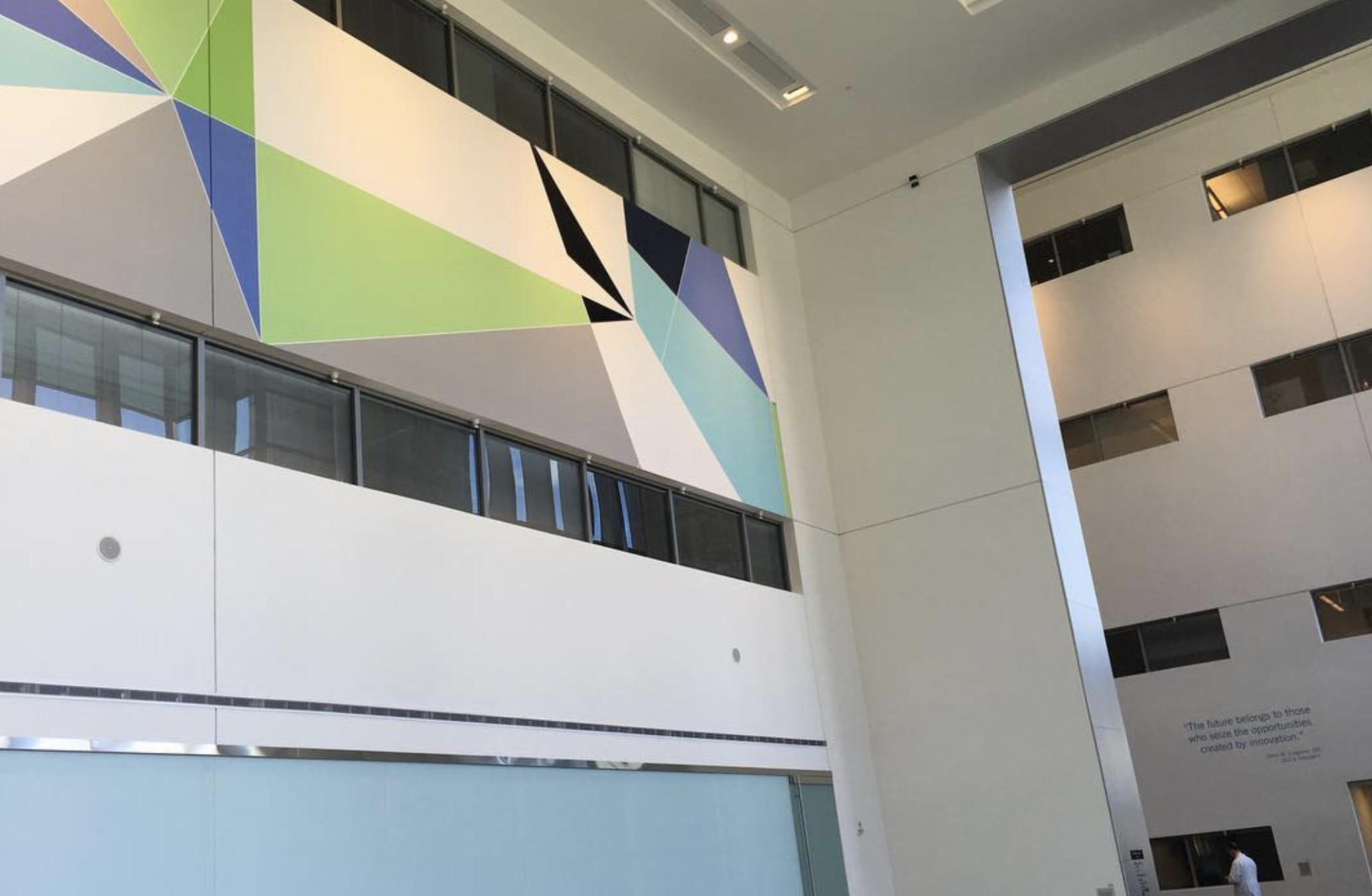
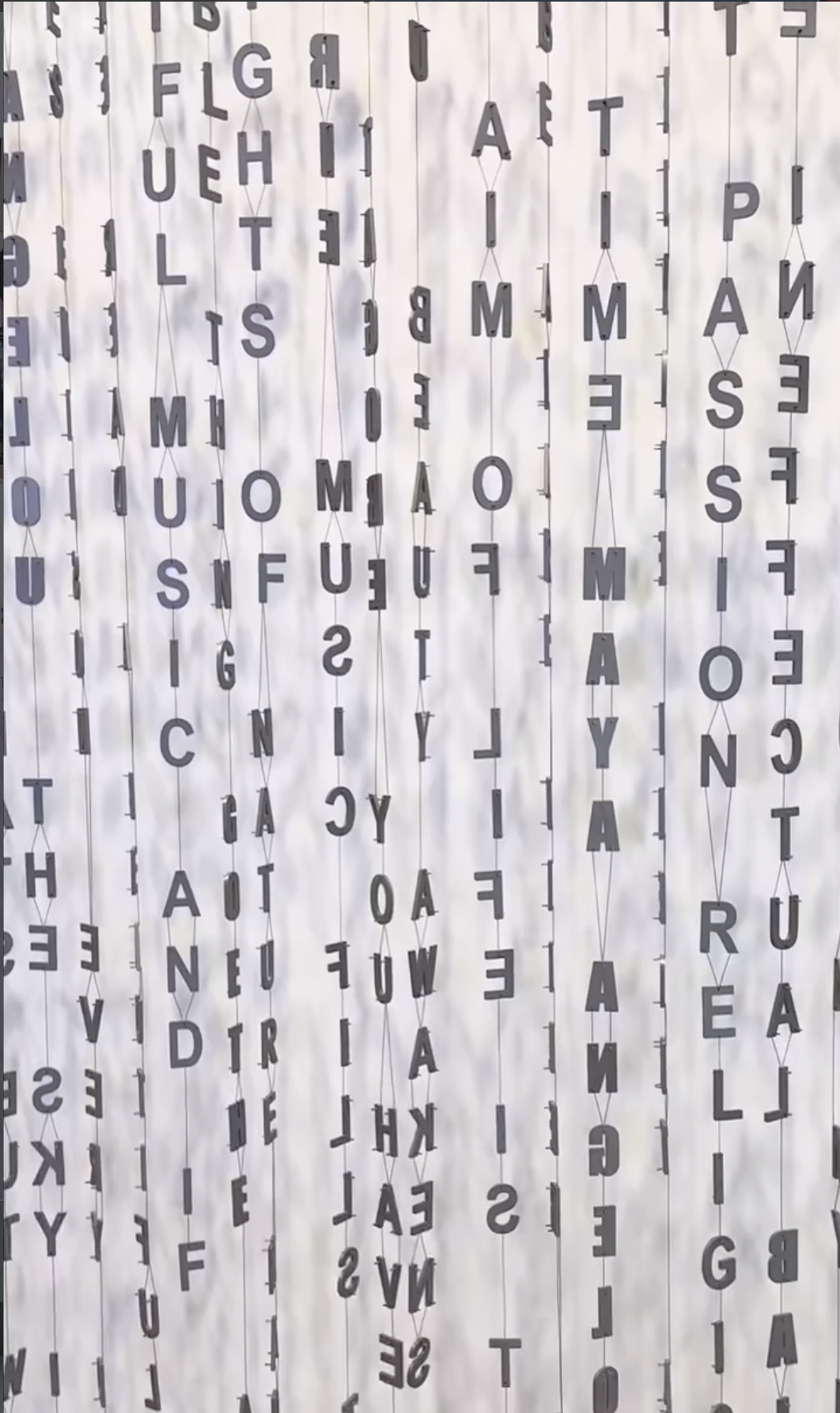
Some of my personal favorite pieces, at the time when I worked there are below. One of these photos is just the vantage point from the hallway desk I was huddled over - nothing exceptionally artistic, just a well-done space with enough shape, color, and typography to keep my eye occupied. Not pictured is also an Employee gallery, where hospital employees - physicians, nurses, and staff can display their own art, something that reflecting back says a lot about the organization - that they were supportive of employees having these kinds of outlets. Fun fact, surgeons are often also fine artists, which makes sense given their ability to remain singularly focused and incredibly attentive to details.

More of the artwork at the Cleveland Clinic can be viewed here, and you can follow on their arts-focused Instagram page.

One memory from my time working here, sometime in 2015, sticks out:
One day, on my half-mile walk from the parking garage to my desk, I was taking the underground tunnel to avoid the snowy, wet Cleveland morning. Wearing boots would require bringing an extra bag and extra pair of shoes, something I hadn't felt like doing that morning. I took the elevator down to the basement with an unusually chatty employee for 7:45am, and as we were talking I saw on his badge which department he worked for: Arts Administration. Having a BFA and background in art, I immediately asked about his job. He was, in fact, an art installer- the person who hangs, removes, and plans the spaces inside of the massive Main Campus footprint. We emailed back and forth, and he sent me information on another program that their department handles: a simple but impactful program that allows a patient, when admitted, to choose from a catalog which artwork can hang in their rooms during their stay. Thousands of hours spent in boardrooms, inside my cubicle long after the sun set as it does early in Cleveland winters, and this connection sticks out. I met hundreds of impressive physicians, surgeons,and executives over the course of my time there, but the art installer who showed up every day, proud and excited to share about his work, left an impression not only about the pride felt across the staff, but in the care and attention to something so small but so impactful in a space that could easily feel sterile.

Design matters. In an era where checking out on screens feels easy, organizations that double-down on real life offer something that a phone could never: tangible moments and real connection to ourselves. I think there's so much opportunity in healthcare spaces as opportunities for connection and ultimately more grounded healing, and I hope one day to be able to impact this more directly, but until then just talking about it feels promising.

Photo Credits:

https://my.clevelandclinic.org/patients/visitor-information/art-collection

Wink

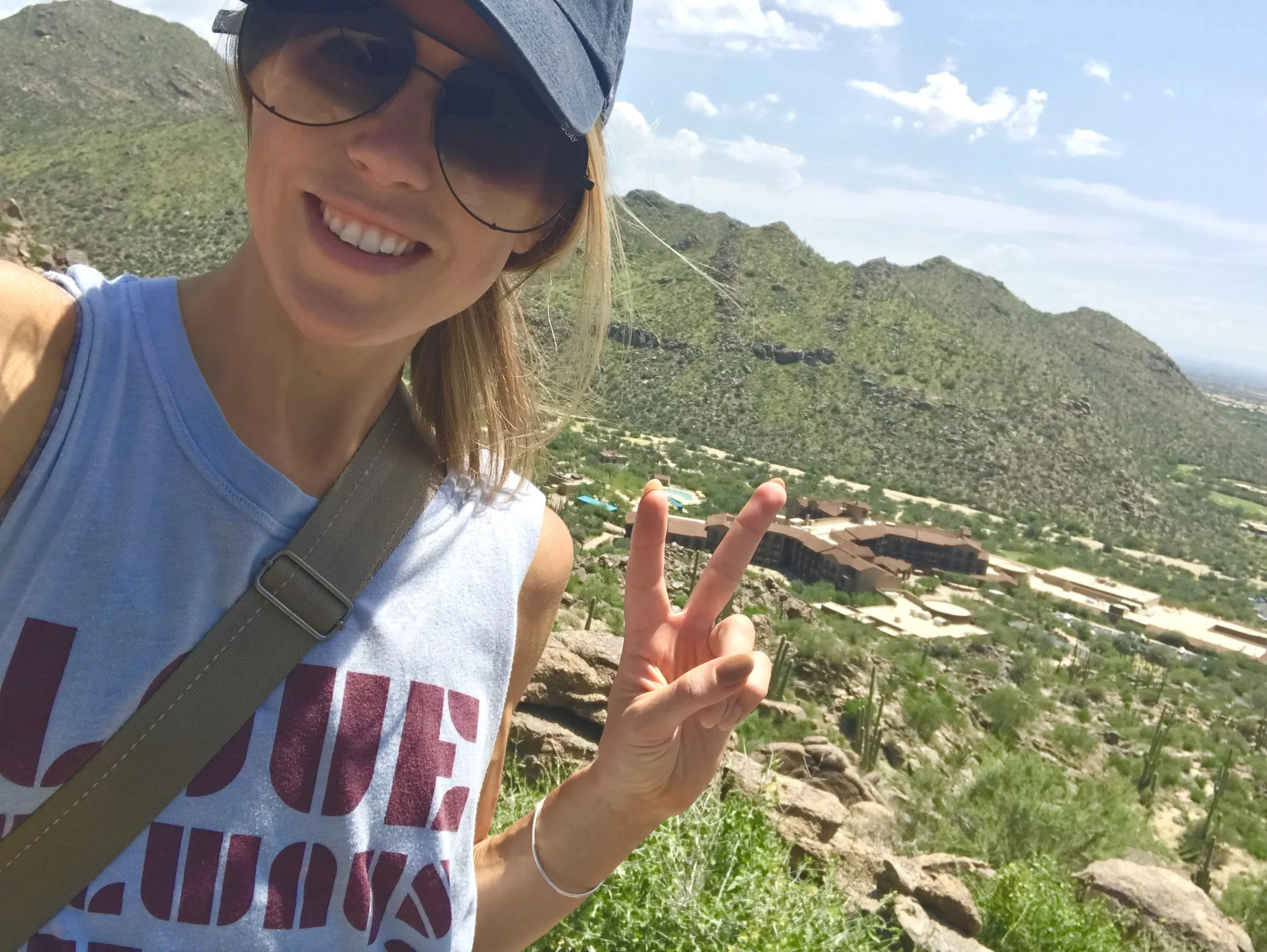
Five years ago I found myself on a literal (very small) mountain in Tucson in August. Setting aside the fact that nobody should be in Arizona in August, the trip reminded me that spontaneity really does pay off, and if you pay attention the universe hands you small surprises all the time.

It was morning, the only time of day even remotely OK to be outside, and I decided to hike up a small mountain behind the resort where I was staying. Very close to the top turnaround point, I passed a woman sitting underneath one of the only trees out there. She was traveling from the East Coast with her husband who was attending a conference at the resort, and she had the same idea as I did, get outside before the sun took you out.

I learned that she worked in the space that I had thought I’d find myself one day, as I was a 26-year old researching grad school programs over a decade earlier. She sat on the Board of NOAH, The National Organization for Arts in Health, and worked professionally to manage a hospital arts program on the East Cost. We sat in the shade exchanging ideas and experiences of our respective career paths. I never went down the professional path of art therapist, or arts programming in healthcare, but it’s an area that I continue to appreciate and follow, and plan to stay closely connected to.

NOAH’s mission is important one: To build community amplify, educate about, and advocate for the power of the arts to improve health and wellbeing for all people. They centralize and advance the development of arts in health through training, resources, and connection. Lots of times arts programs can be a bit chaotic, built on endowments, funds and volutneers, with lots of starts and stops just given competing priorities for healthcare organizations. Having a group to centralize best practices can be the difference when a healthcare facility has the opportunity to accept artwork, art therapy, or any of the many ways the arts can support healing, but doesn’t have expertise in-house to make it happen. The research they conduct also provide much-needed weight when these programs exist in the data-driven world that is decision-making in healthcare, and can be the difference about whether a program continues to be funded, or a new wellness space comes to life.

I have been a member of NOAH ever since, keeping up with their initiatives and programs. It’s also taken me down the path of related opportunities and groups: Michigan Central in Detroit, MATTER Health in Chicago, both not directly arts-focused, but which work in the healthcare space to bring ideas and creative vision to life. Discovering groups like these has given me a community in the healthcare operations career path, and a chance to feel connected to likeminded professionals. And I’ve learned that in the healthcare and health management space, I am sometimes the sole ‘creative’ at the table, influencing forward motion. And while it’s not as literal as bringing physical art into these spaces, the ability to fluidly move between concepts, connect ideas, introduce alternative solutions has been a role I’ve played many times with colleague groups. Finding these communities makes me feel less ‘awkward’ or different, and comfortable knowing that I have spaces to go for resources, events, and likeminded connections.

I haven’t been back to Tucson since, and likely won’t ever go again in August, but that hike was worth the connection made and most importantly, served as a sign to continue following small nudges. It took a lot of very spontaneous, very strange decisions that even led me to be in Arizona that weekend, let alone onto that mountain. But somehow under the shade of a small tree, in the middle of August Arizona heat, two arts in health advocates found themselves killing time at a finance conference and ended up in the same spot, chatting healthcare and arts programming. On the surface nothing looked different after this experience, but it did serve as a reminder that the world really does wink at you if you pay attention.


On Language & Nuance

This article caught my attention over the weekend. AI is pretty much everywhere, and at least for now still fairly easy to 'spot' among non-AI generated content. The point this article makes, that AI has a newer, fairly obvious language pattern, resonated because not only have I noticed this, but I've caught myself questioning some of my own writing and whether it's starting to take on any of that tone. I'm sure I'm not alone.

In short, the article points out that AI has a few distinct language patterns. We're all aware of the Em dash—which I've always personally loved—but now need to be very judicious about its use. Another is more of a pattern in the language itself, and makes me think about how pacing and tonality, not just the words and letters and punctuation themselves, create our experience of language, and how AI may actually be changing that experience in real-time. AI-generated content has what the article refers to as negative parallelism. Describing a thought "NOT AS X, BUT AS YZ". We've all seen it by now: "It's not happening in disparate moments—it's here to stay".

What I think is happening with this "negative parallelism" is that AI is at its core a reasoning tool. It wants to find the most logical output or answer. It's excellent at analyzing and applying patterns to find the most logical path forward. And so, with this AI language tic, I think what it's doing is reasoning in real-time, calling out what something is NOT as a way to point the reader to what must be true, almost as a way to cover it's own bases. In strategy, we work in something called structured problem solving, which is really just a framework for finding a hypothesis and attaching any data points that, when combined, point you to the hypothesis as the logical answer. The scientific method does the same thing. As we know, science, strategy, and, yes, language are all nuanced. But in the face of unlimited paths forward, the strategist or scientist or AI must find a way to prove their chosen path. The article points out a few reasons this tic might be happening, such as human content actually training it this way; or that it's trained to find the path of least resistance to back up a point (doubling down on its output), which are probably also at play. But I think that as a logistician, the AI is coming to a conclusion that when consumed, leads the reader to believe it must be true, introducing a polarity that most of us naturally filter in our thought process without needing to verbalize unless we are making an important point.

This, at least for me, is creating anxiety and tension as I consume AI content. The polarity introduced by saying "not only X, but Y.." creates an urgency around everything which human reasoning and language would normally move through filters and context. This new AI language doesn't leave much room for nuance, and with such definitive speech patterns, we should remember that very few topics are as urgent or as polarizing as every output generated digitally these days. Not a criticism, just an observation. 

I'm currently working on a project that's close to my heart, one that isn't finished or ready for showing yet, but which highlights the reverence around craft, tradition and the makers and authors behind it. I'm not sure if it's part of growing and getting older, but I've been drawn lately to anything with deep history, tradition, and hand-made qualities–Like the crochet, gardening, and sourdough in my family’s tradition, and also things such as the quality of sound coming from old records, song writing, real, authentic style whether thats in home decor, fashion, or art, and all of the nuances and mistakes and happy divergences that go along with these experiences. 

Perhaps one of the most obvious impacts that AI has already had has been on the written word, on language, and this article reminded me of that while raising an interesting question: What is the new language of AI creating long-term? I'm not talking about what it means for data, intelligence, reasoning.... I'm talking about watching in real-time the rise of a new language. A way of combining words and sounds and punctuation. It hadn't occurred to me, but I'm realizing how much language actually impacts our experience of a thought, or of how to reason. A language that's more descriptive and beautiful imparts a different tone than one which is curt, linear. One isn't better or worse than the other, but they convey different feelings and inherently demand different pacing of information. AI is excellent and getting a point across, doubling down, and moving to the next thing. However, the magic of the journey—what's captured in the awkward words or the parts of language that develop from not having the right word yet—is missing. And it's being trained on ITSELF, so naturally over time, the nuances will continue to filter out. I'm curious as to how AI developers will manage this, or if they even will.

I hadn't considered this until recently, but we really are watching the rise of a new language in real-time, cutting across geography, and since language is the core of a culture, I wonder how this will shape the collective us moving forward: How will the art of writing change? Will we stop going through the clunky process of coming to a conclusion, a song bridge, a plot twist? And most importantly, if we do slow down our original works in progress, how will AI continue to interpret our history up until that point? Will this all create stronger makers who double-down on their work? Is the rise of AI language creating even more polarity, or is it pushing us to further explore our own reasoning and originality, and embrace the messy, subtle middle?

Spaces, part 1

I'm kicking off research for my next brand project, and I'm deep in a rabbit hole of interiors, architecture, and design…Swoon

Being in the healthcare space professionally, I'm always curious how different industries are translated there and find myself curious if any of the elevated, luxury design studios do work in this space. I’ve been able to work on healthcare design and space planning for a few projects in my career, but mostly from the project management side. Even so, I understand the nuanced constraints that exist within healthcare. Exam rooms need to be both efficient and duplicative. Extremely minimal in order to maintain safety requirements, and allow providers to know where each tool and supply is housed. Patients don't think about it like this, but god forbid something unexpected happens during an exam, the care team needs to know without a doubt where emergency supplies are located, exactly how far a door will open to allow a stretcher through, and any other spatial detail that could come in the way of their ability to care for a patient. Even glare from a picture frame could cause issues in the right circumstance.  A waiting room should be comfortable but discreet. Non-acute facilities like longterm care or rehab must still create an environment conducive to healing, safety–and ideally–trust.  

Even though healthcare design has a set of both strict clinical guidelines and evidence-based practices, I am a firm believer in guardrails being the best way to motivate good design outcomes. Designers typically request boundaries and rules in order to know the limits of the finished product. It's very hard to produce an amazing product or service by saying " produce an amazing product or service". Give a designer a set of criteria though, and innovation quickly emerges–and since these spaces require so much precision and accuracy, I believe in bringing in design (and the designers behind it) into developing solutions in these spaces.

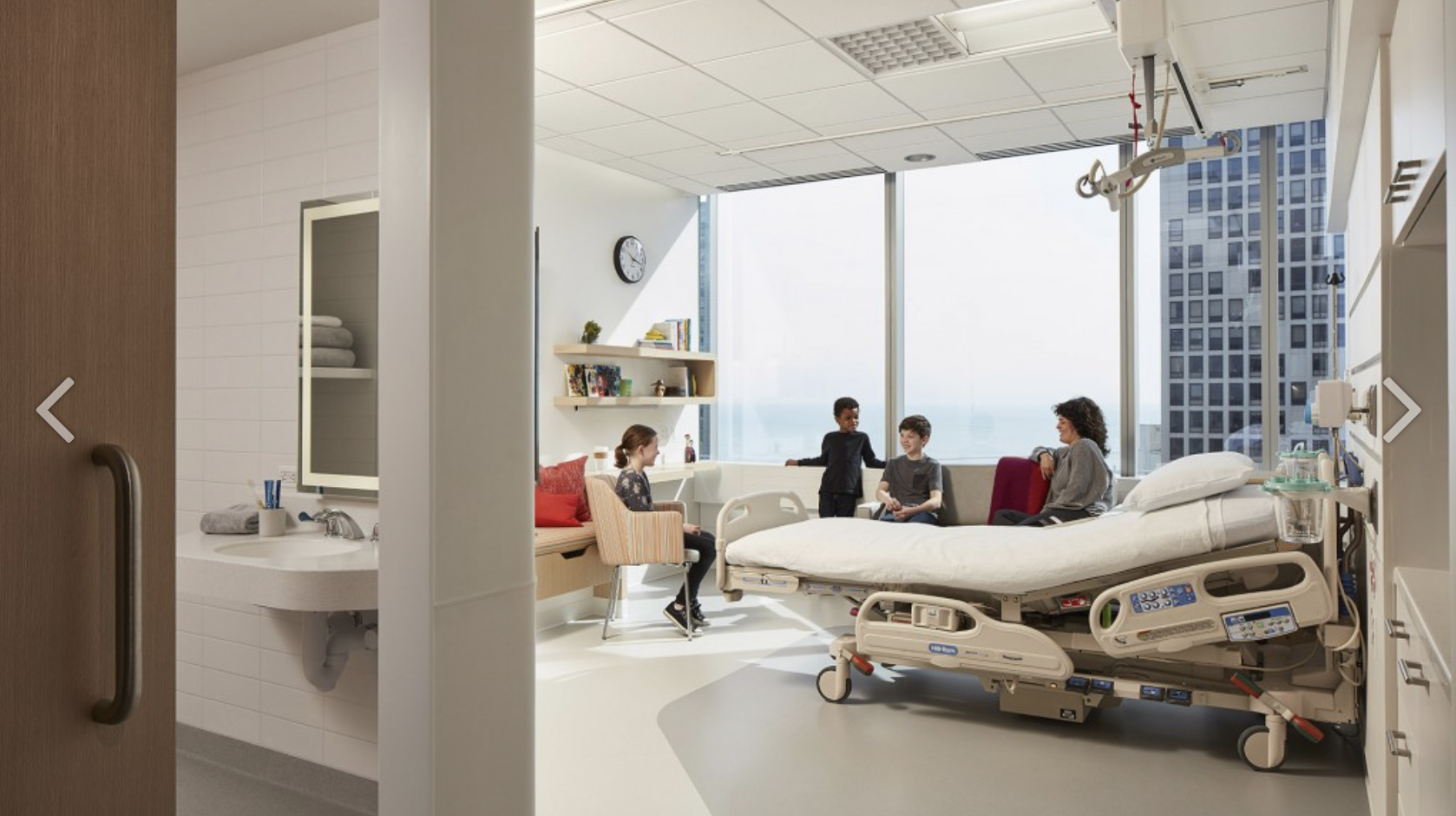
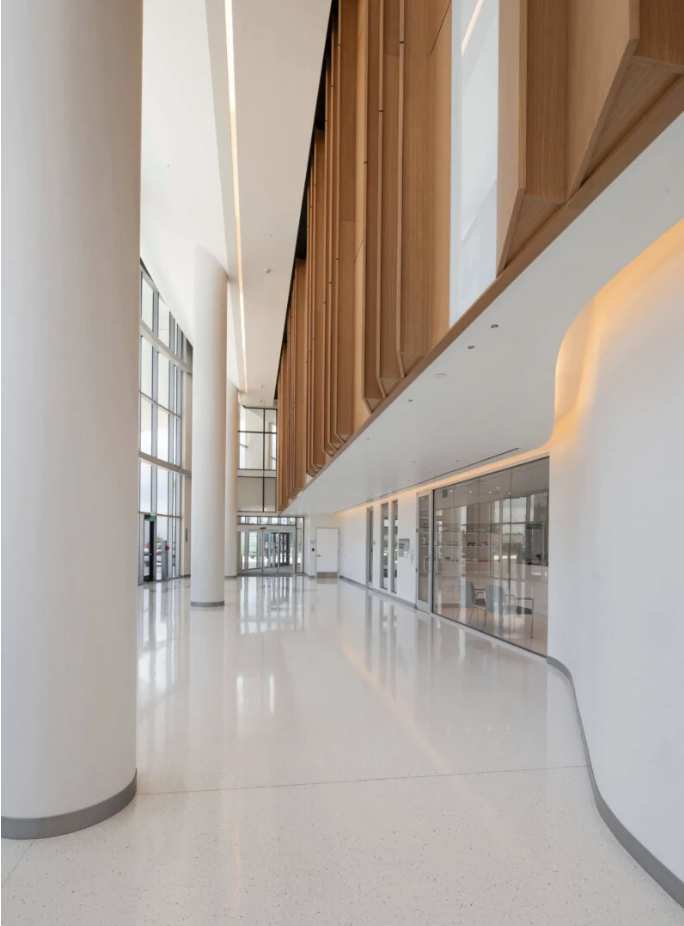
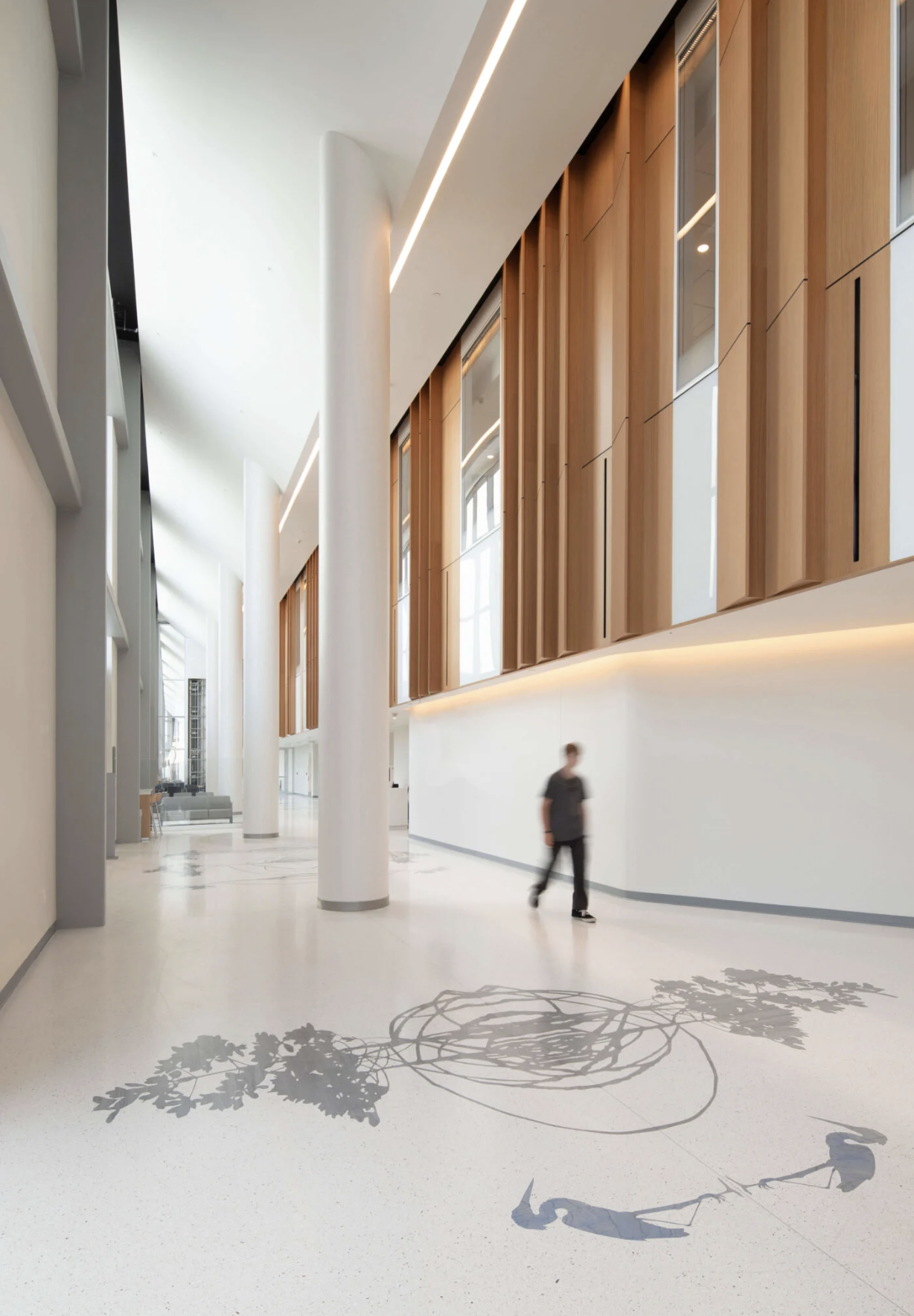
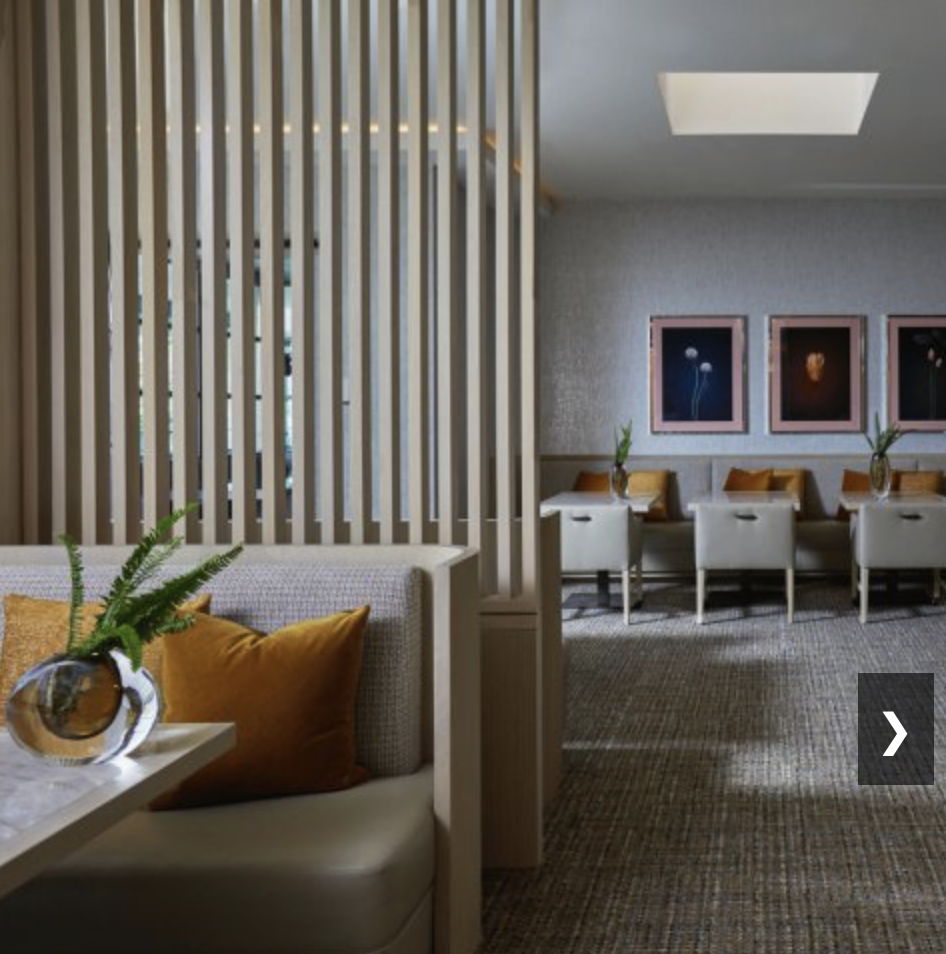
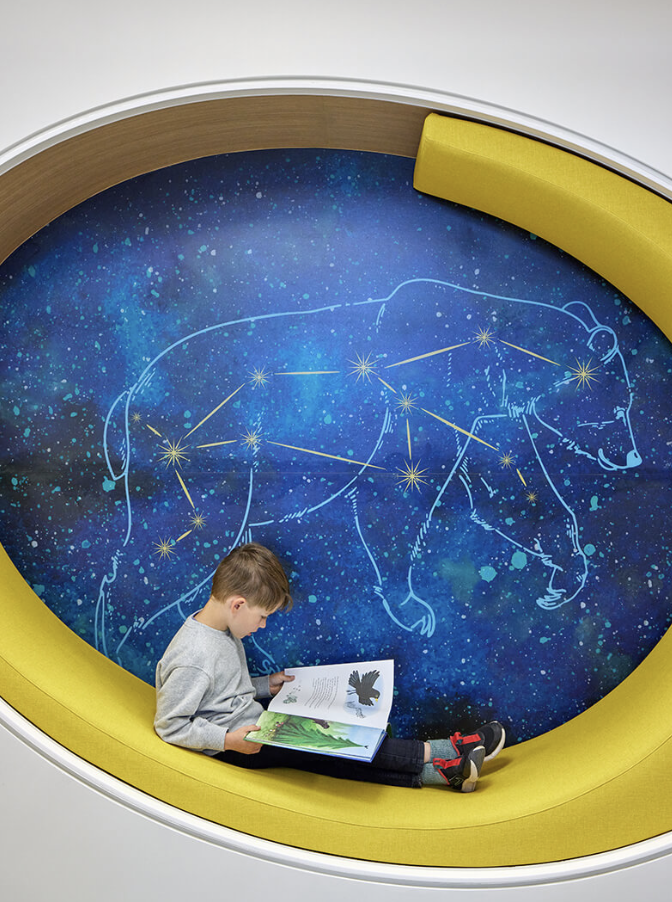
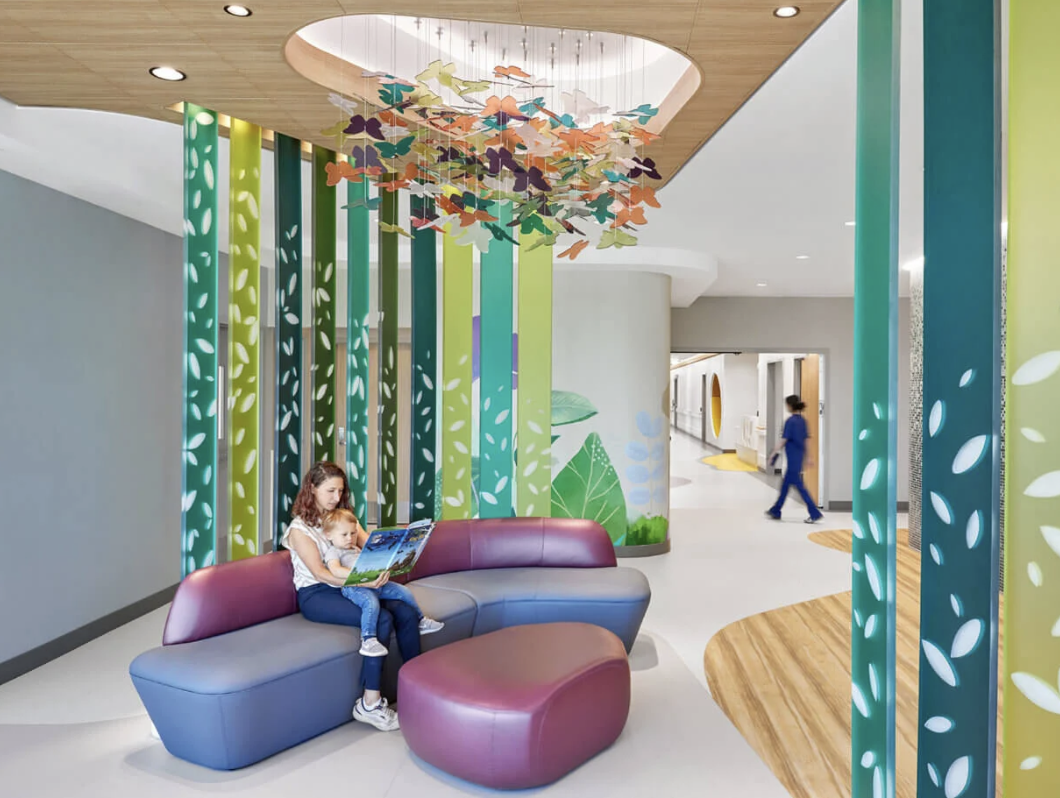
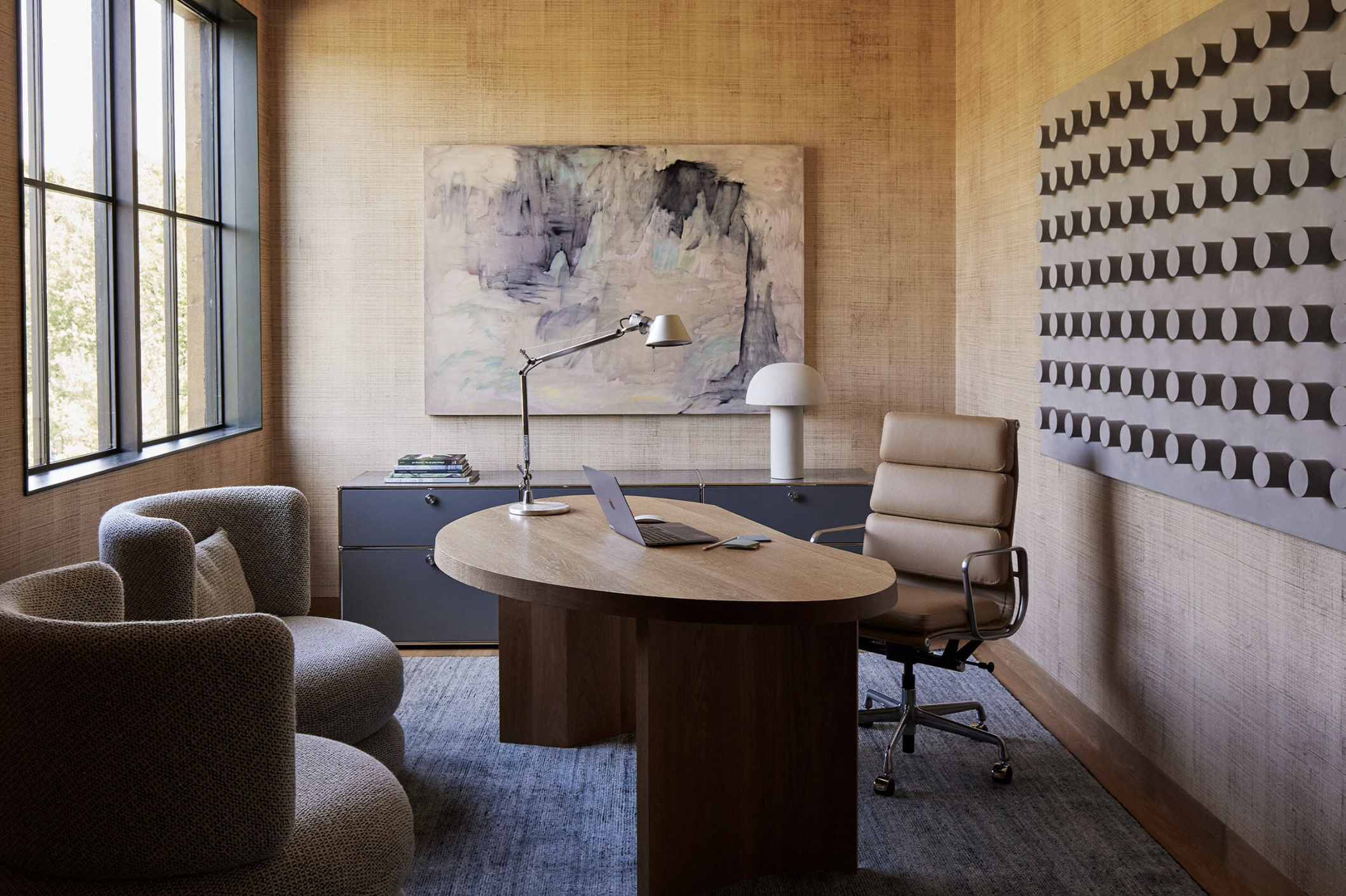
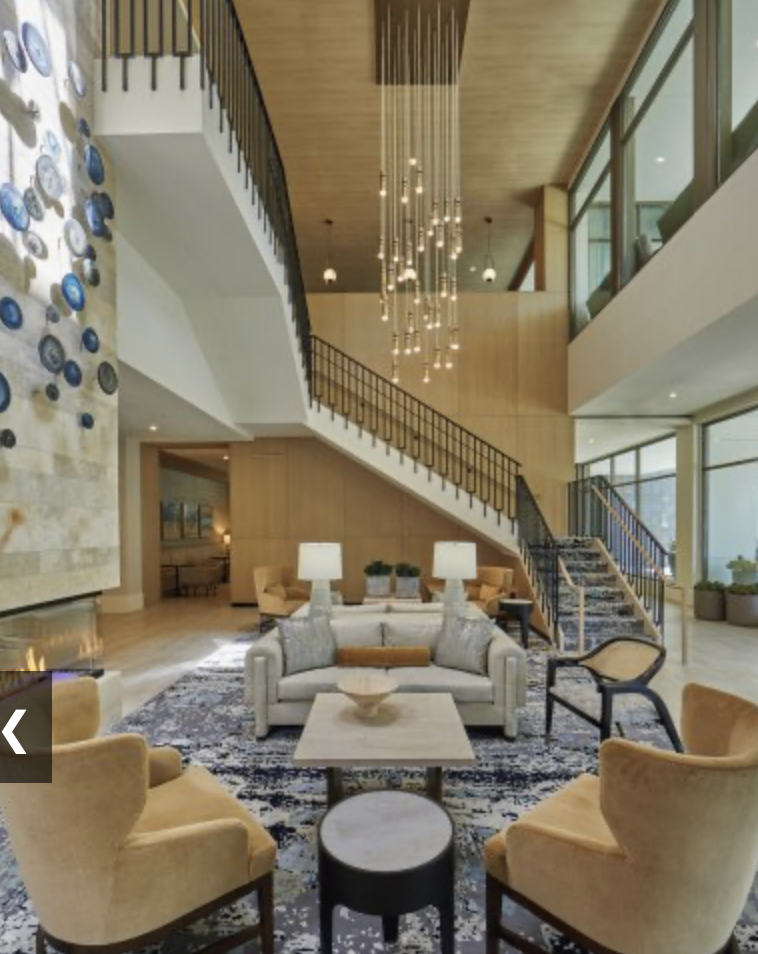
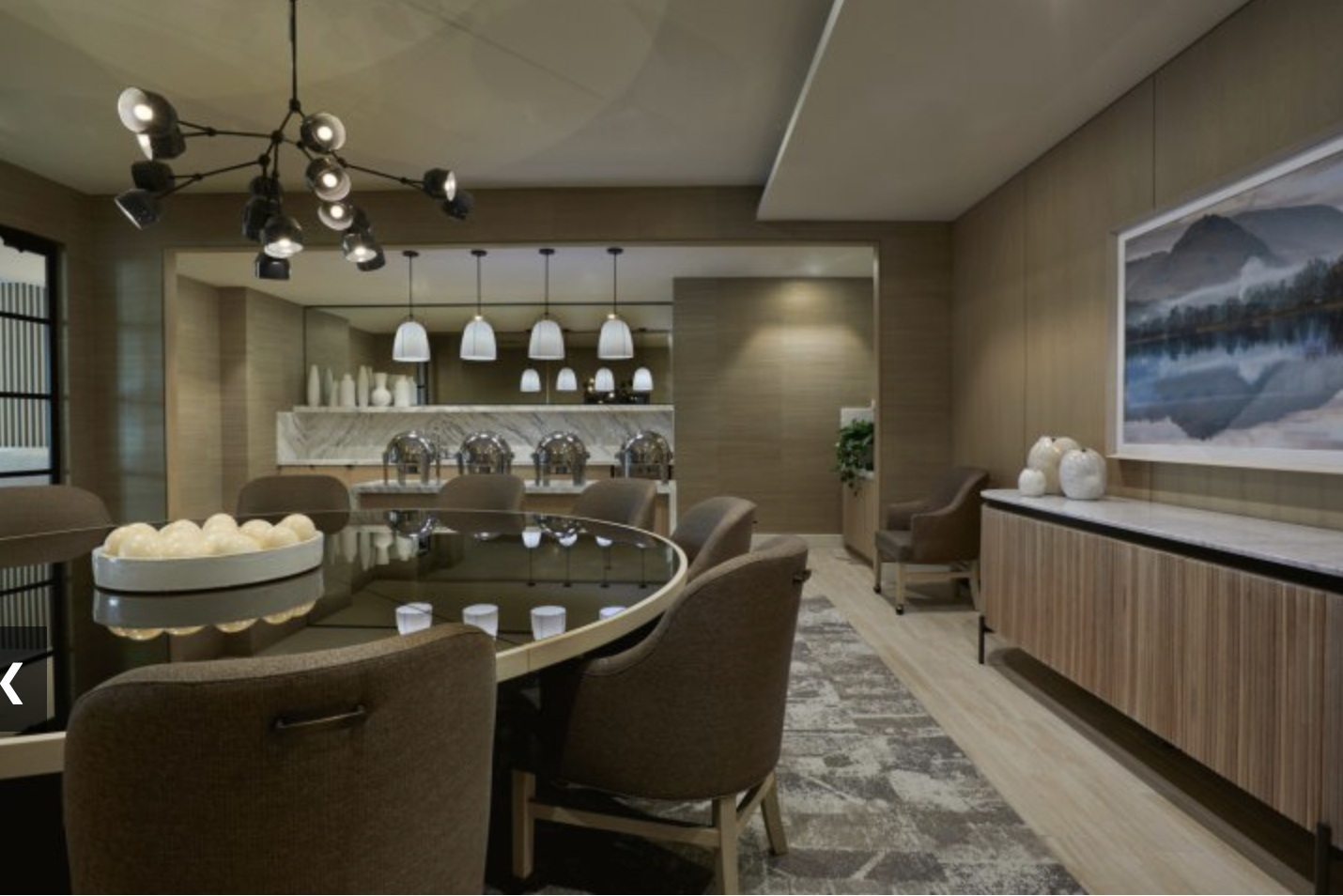
I'm going to expand on this topic again, but wanted to showcase a few very cool examples of elevated healthcare spaces that promote an environment of trust & care, while supporting the teams that work there every day:

The client I'm working for isn't currently in the healthcare space, but I'm struck with how the elevated, intricate work they do might one day show up in that industry. As health / healthcare / wellness / healing / are increasingly blurred and we understand the impact that built environment has on our biology and wellbeing, I have no doubt that the next generation of healthcare design will adopt a version of craftsmanship and luxury that is, yes, beautiful but also promotes hope and communicates a level of care that intentional, high-touch design conveys.

Photos of:
Shirley Ryan Ability Lab, Gensler
Jackson West Medical Campus, Doral FL, Perkins + Will
Renown Health NICU/PICU, Reno, NV, Perkins + Will
UW Medicine Center for Behavioral Health and Learning, Cannon Design
The Variel Assisted Living, Rodrigo Vargas Design
Animal Hospital, Ontario, Kelly Wearstler

Photo credits:
https://www.gensler.com/projects/shirley-ryan-abilitylab
https://perkinswill.com/project/jackson-west-medical-center-doral-campus/
https://perkinswill.com/project/renown-tahoe-tower-nicu-picu/
https://www.kellywearstler.com/animalhospital?srsltid=AfmBOopI
B7e_pEWjiPmfX85N23vXqxSmED-GXP3oaSUIQ4tpQt8rbXR

https://www.cannondesign.com/work/university-of-washington-center-for-behavioral-health-and-learning
https://www.rodrigovargasdesign.com/portfolio/Senior%20Living/variel

Trust your taste

This weekend I spent a few hours with my new buddy, ChatGPT. I used it to help digest and organize a huge amount of information that both saved me time and which I had been wrestling with for too long and needed another ‘set’ of eyes. It was incredibly helpful and got me to where I needed to go in under ten minutes, versus what would have probably taken me two or three days, considering needing to take mental breaks and do normal life.

It’s not a tool I use often in my personal life, if I’m being honest. I personally place extremely high value on critical thinking, and find the tasks of thinking through my day, planning, and having the experience of stumbling on something that surprises or delights me genuinely valuable. If I streamlined everything in my life, I’d almost feel less in control and less ownership over things, as if I was just given a to-do list every day. I blame my Myers-Briggs profile partially for this, and maybe if I were wired differently I’d not mind the process of masterminding most things genuinely enjoyable, but that’s a tangent for another time. Maybe I’ll eventually shift my outlook, maybe that’s where this is all headed, who knows.

At the same time this week, I had saved this social media post from Forbes titled, “Why Taste is the One Skill AI Can’t Copy”.

It made me feel hopeful and excited about AI, and reading the article actually got me to open up Chat and start using it as the tool that it is, for something in my personal life, instead of holding onto the idea that my own brain would be the better tool. Because the article pointed out something that I had considered, but never saw in writing - AI cannot replace discernment, and that’s really what our brains are analyzing all day long. Sure, it can organize thoughts, create lists, solve problems. But discernment - judgement, perception, understanding, and perspective of the world around us - is what makes us all unique. It’s what makes one person choose to move across the country to a huge city and another person decide that would be the worst option for him. It’s knowing that the perfect answer presented is actually not right for us, but makes sense on paper. It’s the intuitive nudge that we’ve all both listened to and ignored. AI will probably eventually get to the point of being able to discern, even in the style of each individual human. But the small pivots, the small experiential impacts that our lived experiences play on each tiny choice we make will always be the difference between AI and us.

Taste is something that I’ve been in awe of since I was very young - I’ve naturally developed my ‘eye’ for the things that feel like me. As I’m getting comfortable and open to how AI is showing up in everyday life, knowing where the True North lies is actually helping me use AI as a tool to amplify that compass, and that’s something that I can get on board with.

Enter Stage Left

We’re going way back - to sometime around 1998 or 1999. On a side note - What a great few years, huh? I’ll always be a 90’s kid at heart, and thinking of what the world looked like then, and being at that perfectly awkward middle school stage, I wouldn’t change it for the world.

I was asked recently, what are some work projects that stand out to you..no filtering, no ego. Just projects that you would take on in a heartbeat if given the chance again. I was able to list off a good number of cool strategy, healthcare, design, and innovation projects I’ve had the opportunity to work on over my career. But, what stood out the most was actually not a ‘project’ and it certainly wasn’t for ‘work’:

During Middle School (7th & 8th grades) I was asked if I wanted to be the Stage Manager for the school musical productions the school hosted each year. My piano teacher at the time was also the musical lead, and one of the school’s main production managers. One day after our practice she asked if I was interested, and I agreed but honestly had no idea why she asked me. A story for another time, but if you knew me as a child you know I was NOT eager to be on stage. Backstage “crew”, maybe. But speaking in public, and certainly performing, was not going to happen. If I hadn’t been taking lessons with her, she probably would never had asked me. Either way, unexpectedly, this experience stood out this past week when I was asked about my favorite career moments.

It takes some time before you can see a red thread tying a career together. It takes lots of projects, lots of mistakes, lots of critical conversations, and lots of experiementation to build a library of common behaviors, strengths, and interests that showcase your unique strengths. One thing that I’m now seeing is that I love to connect, and to orchestrate. Some teams have called it Air Traffic Control, others Architect (fun fact: my Myers-Briggs type is called The Architect…so that tracks), others just Manager. But–give me a messy, complicated problem or environment and I love to roll up my sleeves, assess the damage, and get to work organizing, amplifying voices, ensuring best-fit, and tweaking direction. Seeing something come to life is almost magical, like that opening-night performance after a year of private rehearsals.

I’m not going to list off my work, but I see this thread showing up in things like strategy workshops and executive retreat facilitation, building first-of-their-kind products, supporting and co-leading the design of a new clinical startup, even designing a brand system and environment like a recent project helping to build a brand and story around a bookstore. I love being behind the scenes, but directing vision and attaching and connecting critical activities to make the vision a reality.

As an adult, I find it amusing that at age 11 or 12, I was chosen to be the boss with the clipboard and flashlight, making sure the production ran seamlessly and every team knew their orders. I wasn’t the loudest, most direct, or even close to assertive, student in the class. But, maybe…I had influence. It’s a cool concept to think about, because I’ve leaned in to roles requiring indirect authority over and over without even realizing it ever since. Yes, one of my career goals is to lead a team, and I’m sure I’ll get there. But the growth that comes through navigating indirect influence, building trust, developing camaraderie is important also, and it’s something that even back then, even when I didn’t have the loudest voice for stage I somehow figured it out, and still remember it decades later as a standout experience.

And for the record I would absolutely take on a stage manager job today, so if anyone is looking give me a call. My clipboard and flashlight are ready - although maybe it would just be the all-in-one device we all carry around now. I think I’d prefer the late 90’s experience one more time, though.

good things

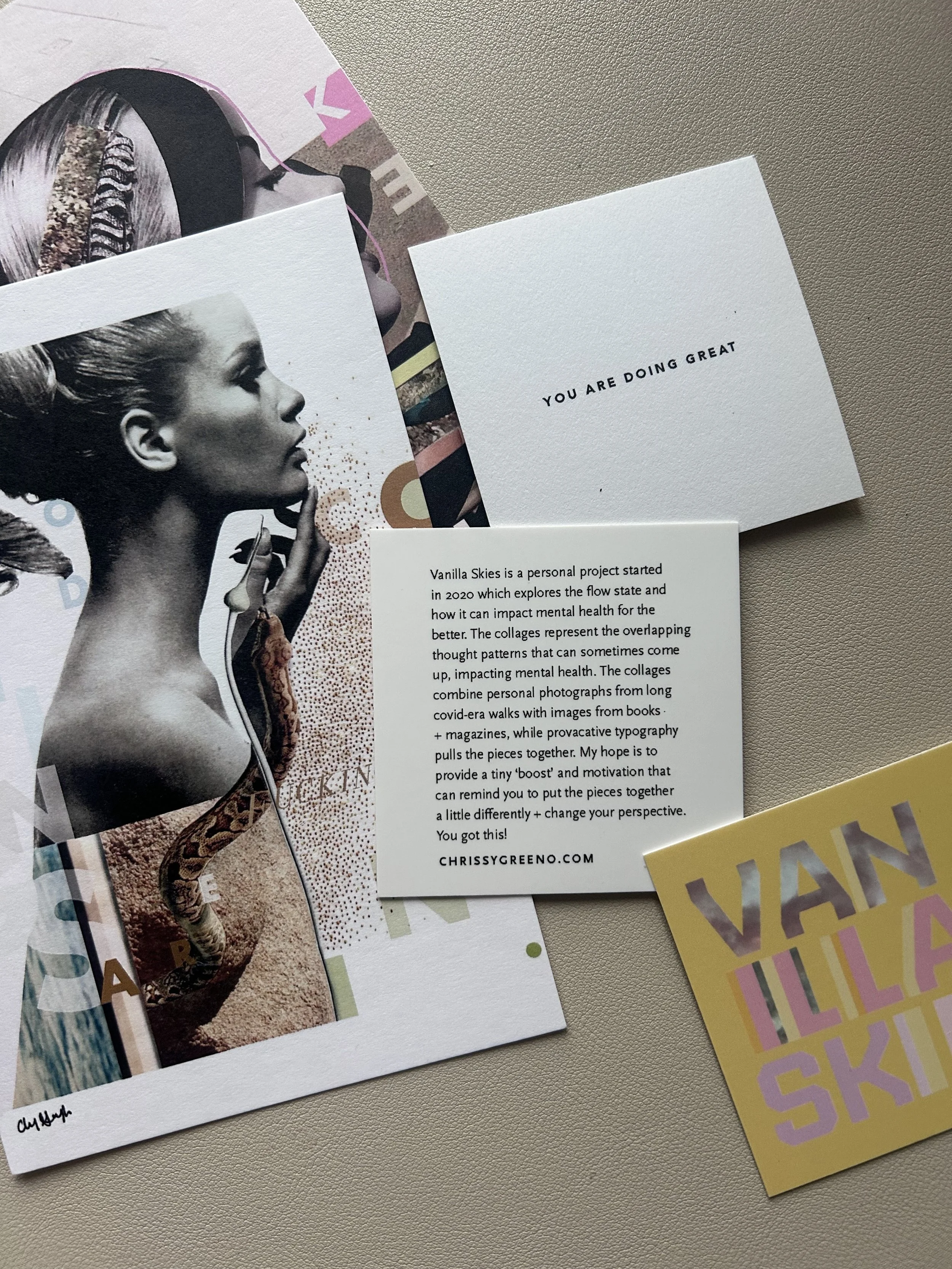
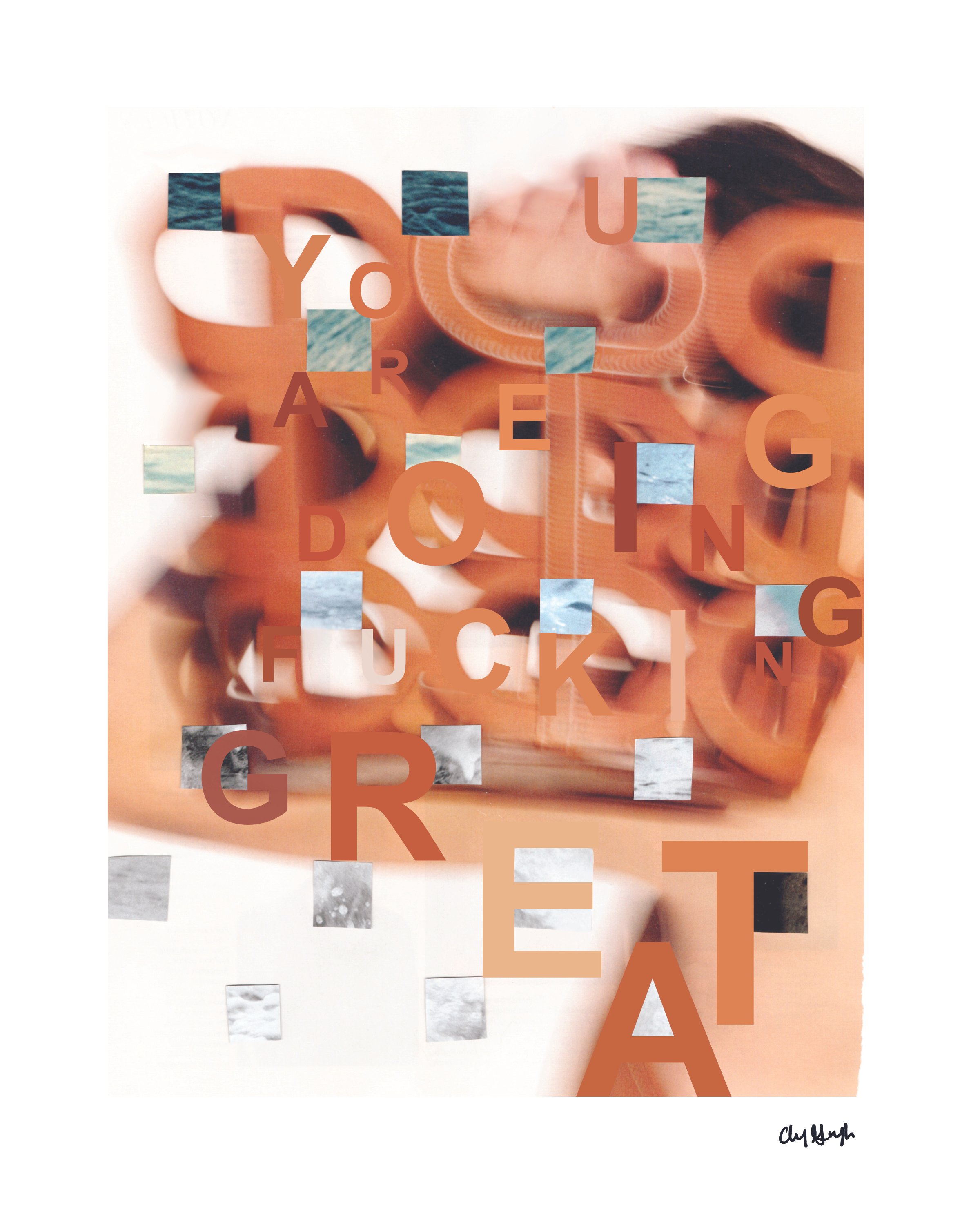
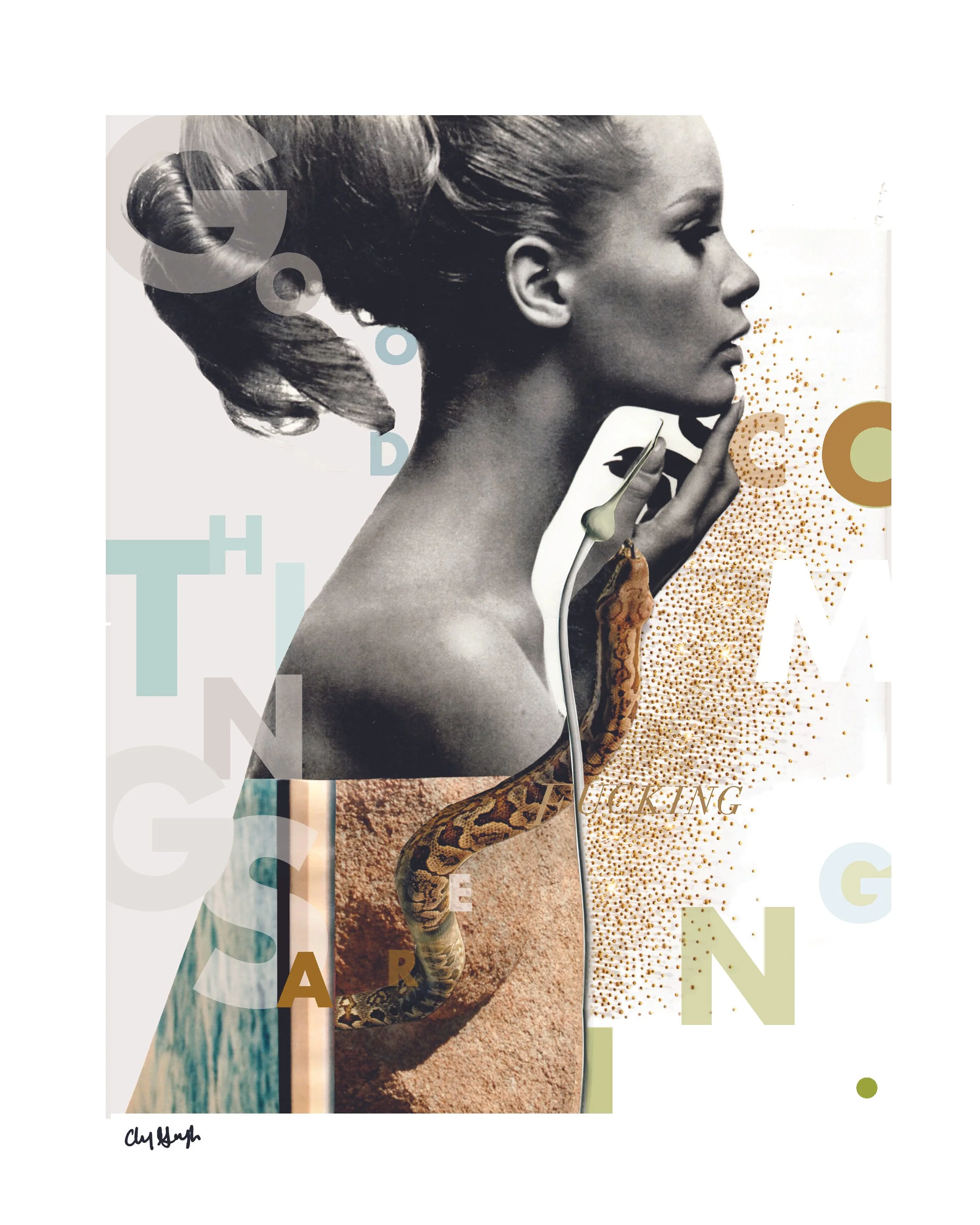
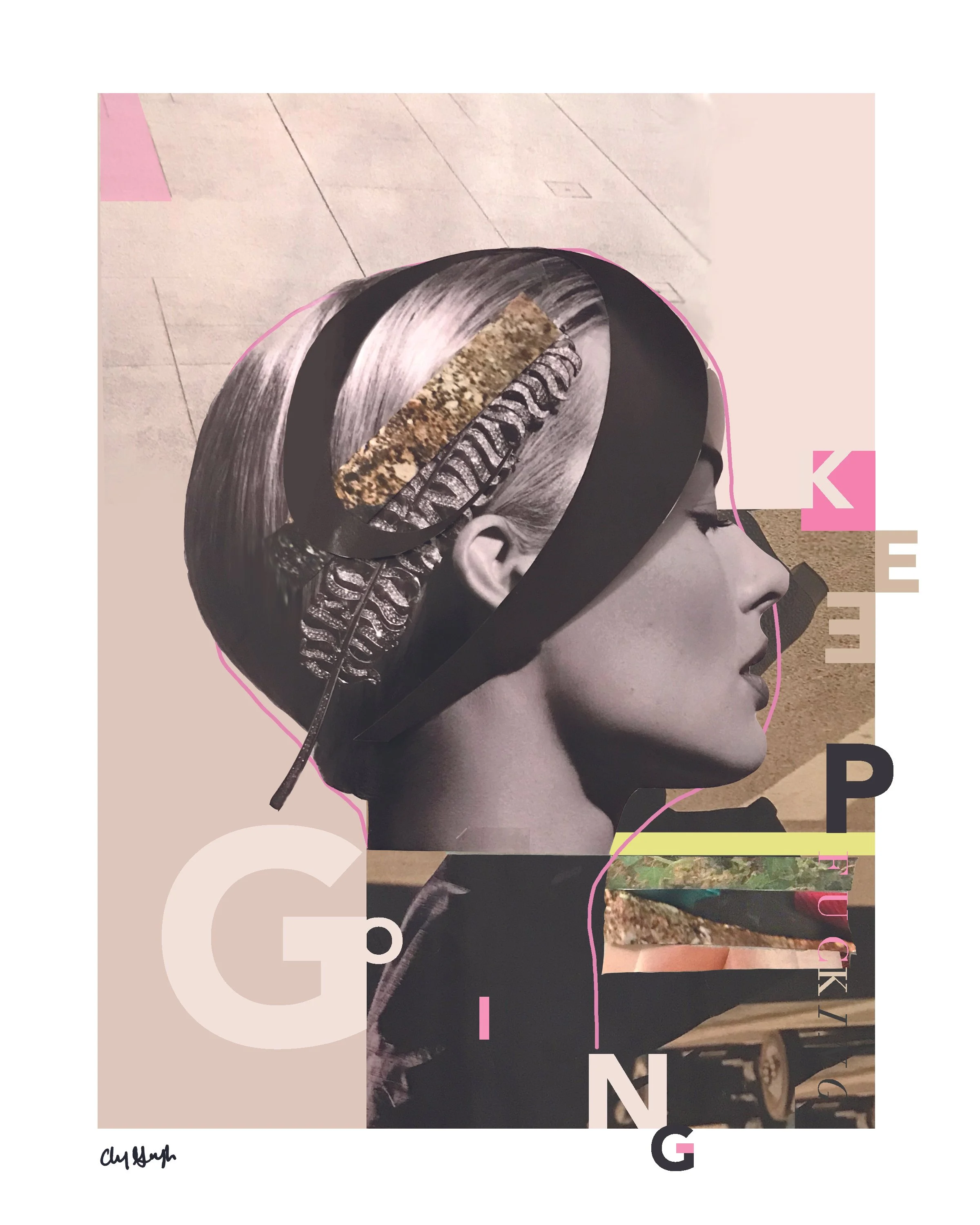
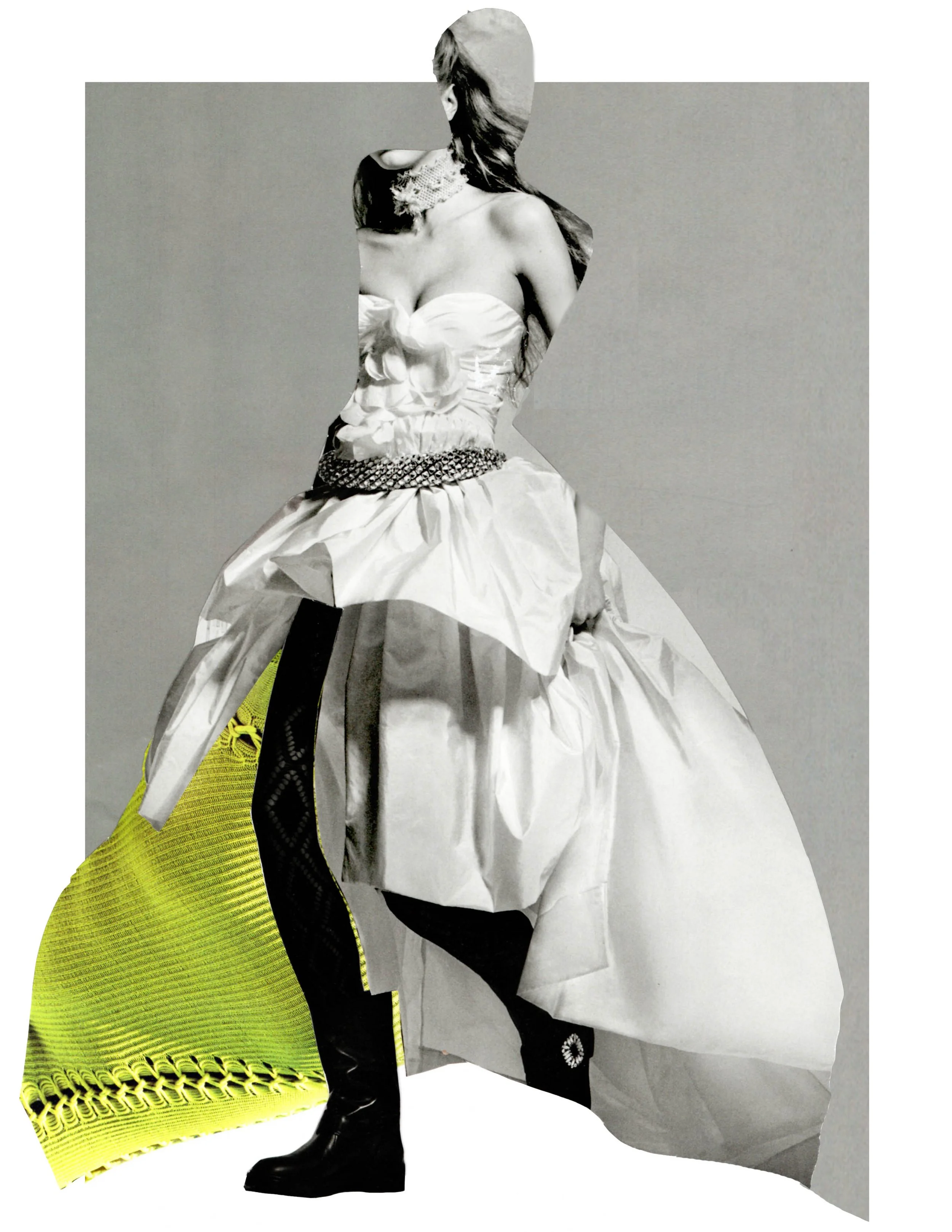
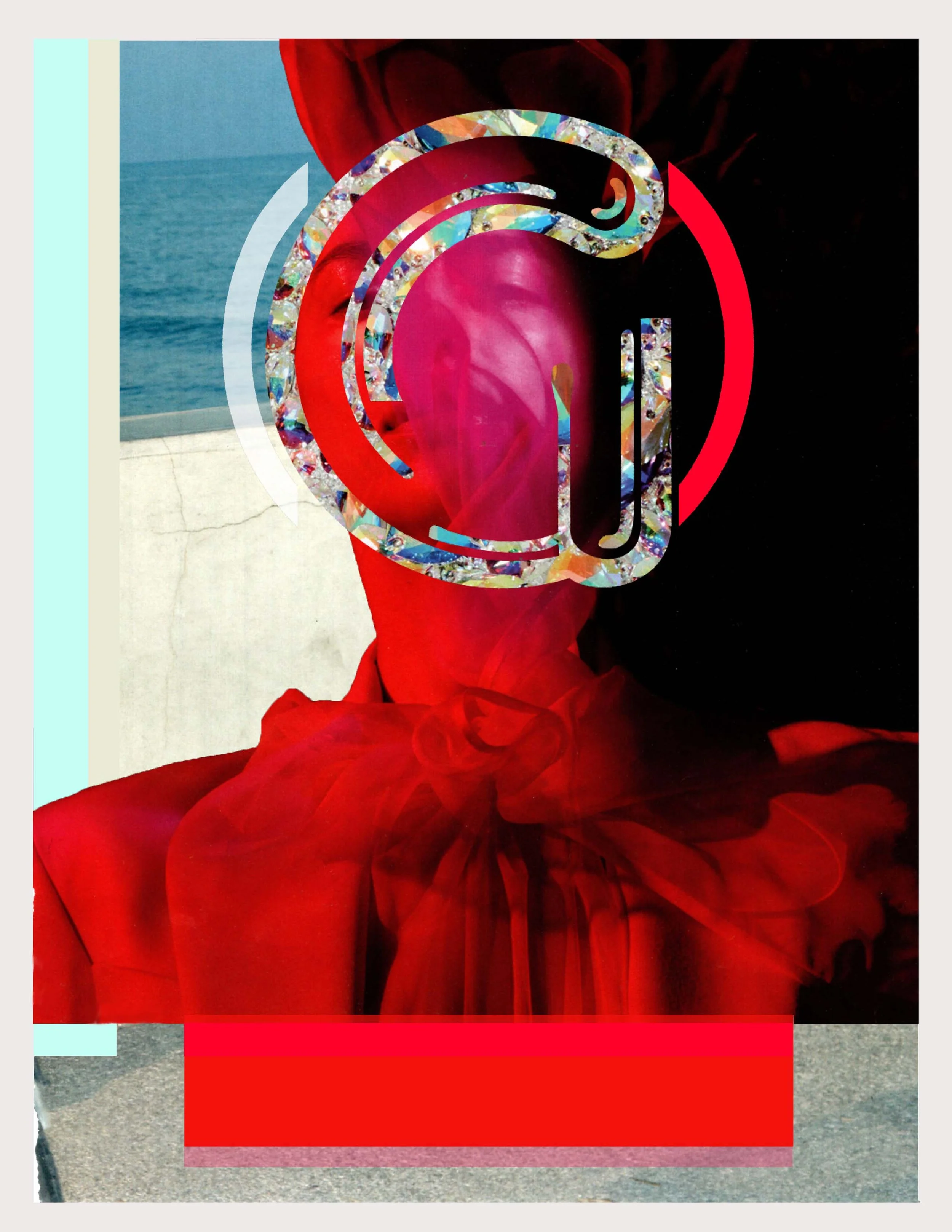
Vanilla Skies is a personal project started in 2020, during the early days of the COVID lockdowns, which explores the flow state and how it can impact mental health for the better. As I’ve grown, into my career and personally, I understand the pressures that seem to multiply whether you’re a C-level executive, managing a household, or anything in between. Life doesn’t slow down, and today’s pace of life doesn’t allow for much space in our days to reset. Each moment can be filled with a little dopamine hit, every second begs for progress. The flow state is a stopgap built into our operating systems, to the sometimes overwhelming experience of being human, it gives us a chance to recharge exponentially, and without much forcing. Athletes and artists already know what the flow state feels like, but I’ve come to realize that lots of others might not, because it requires discipline as an adult. I am pretty easily able to drop into this experience if given the right mix of time and environment, but it’s something that I have to plan around to fit into my life. For me, and others I know, being engrossed in something, literally anything that lights you up, is incredibly rejuvenating and can provide the energy needed to jump through our next set of pressures and hoops.

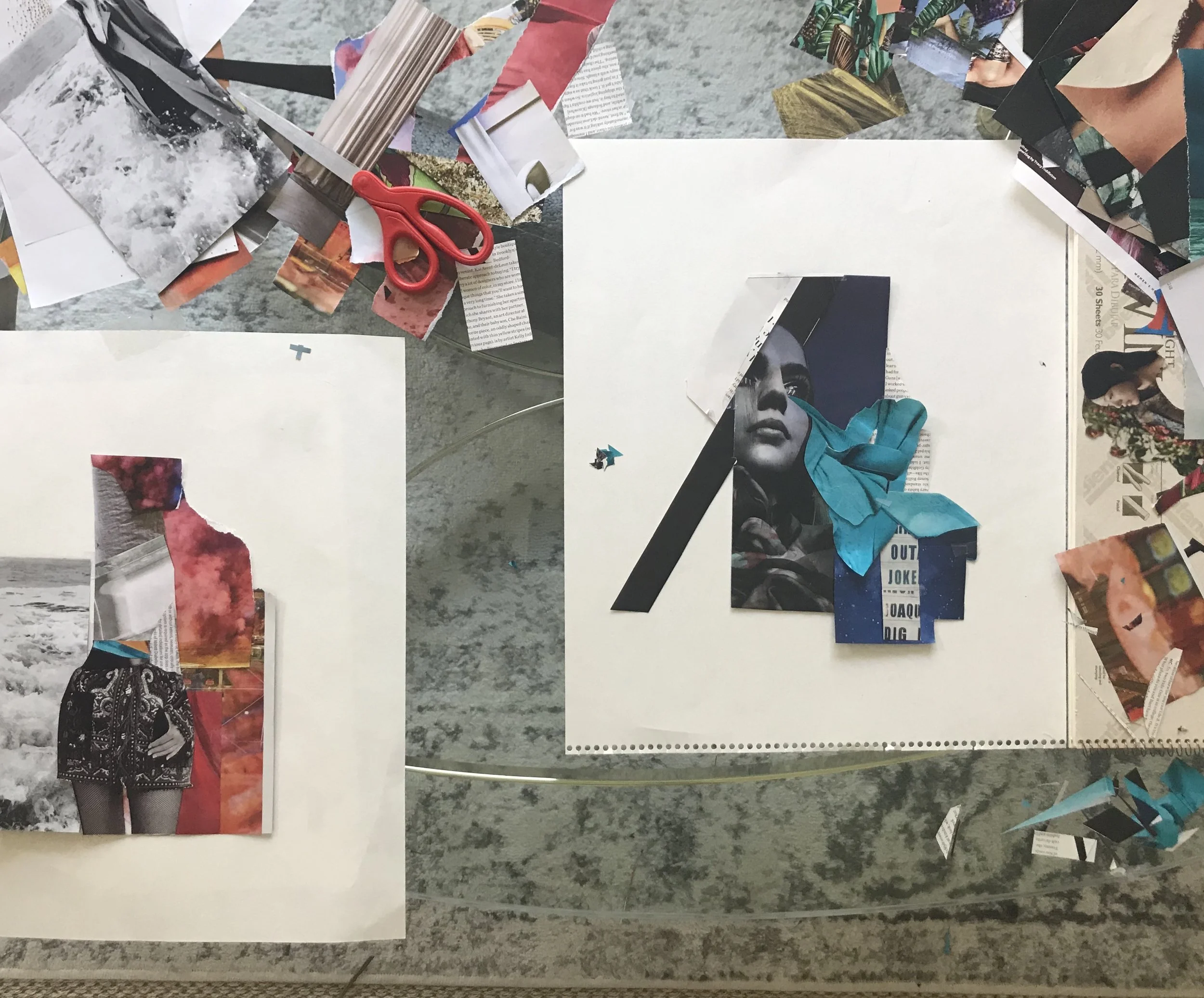
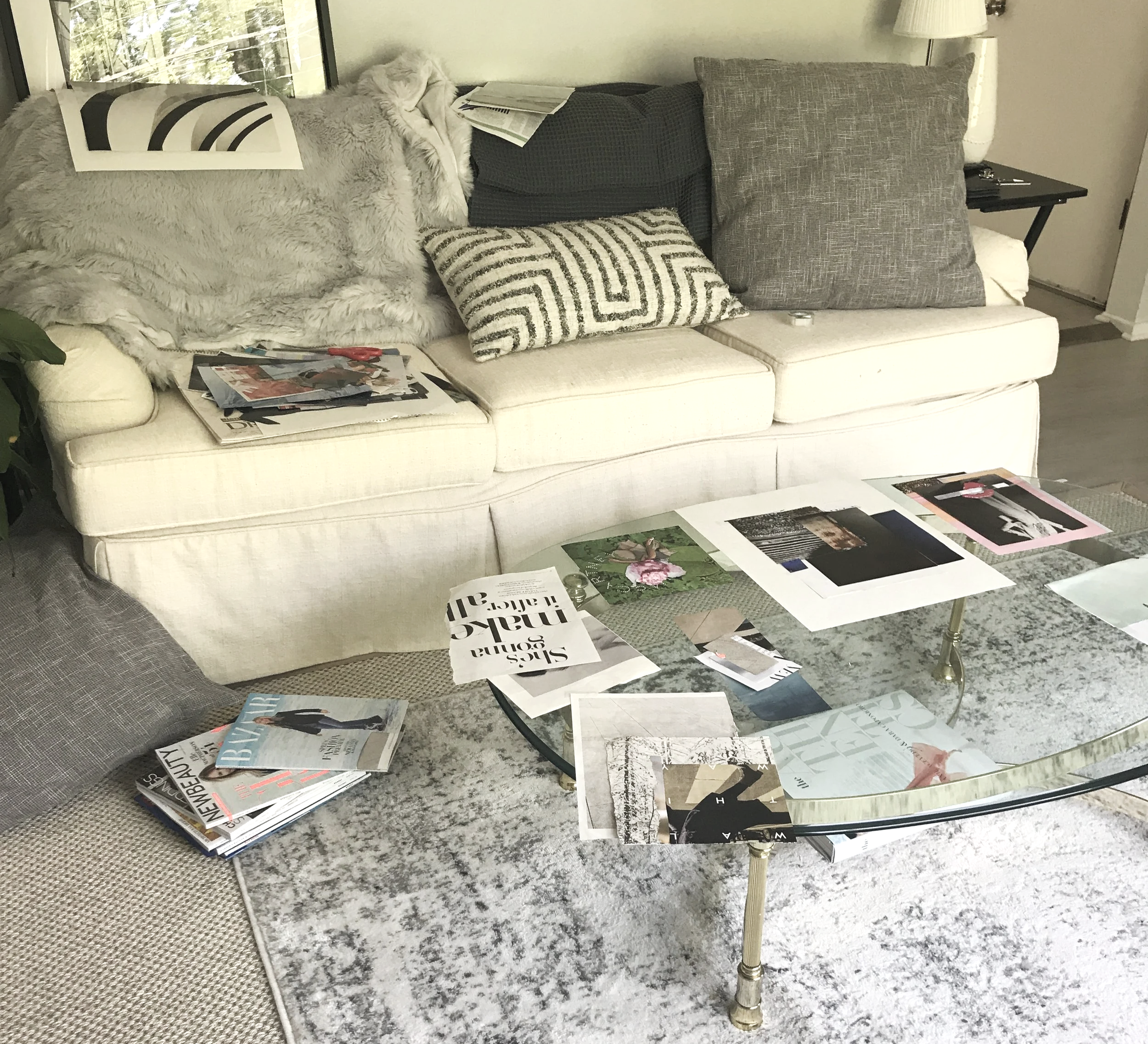
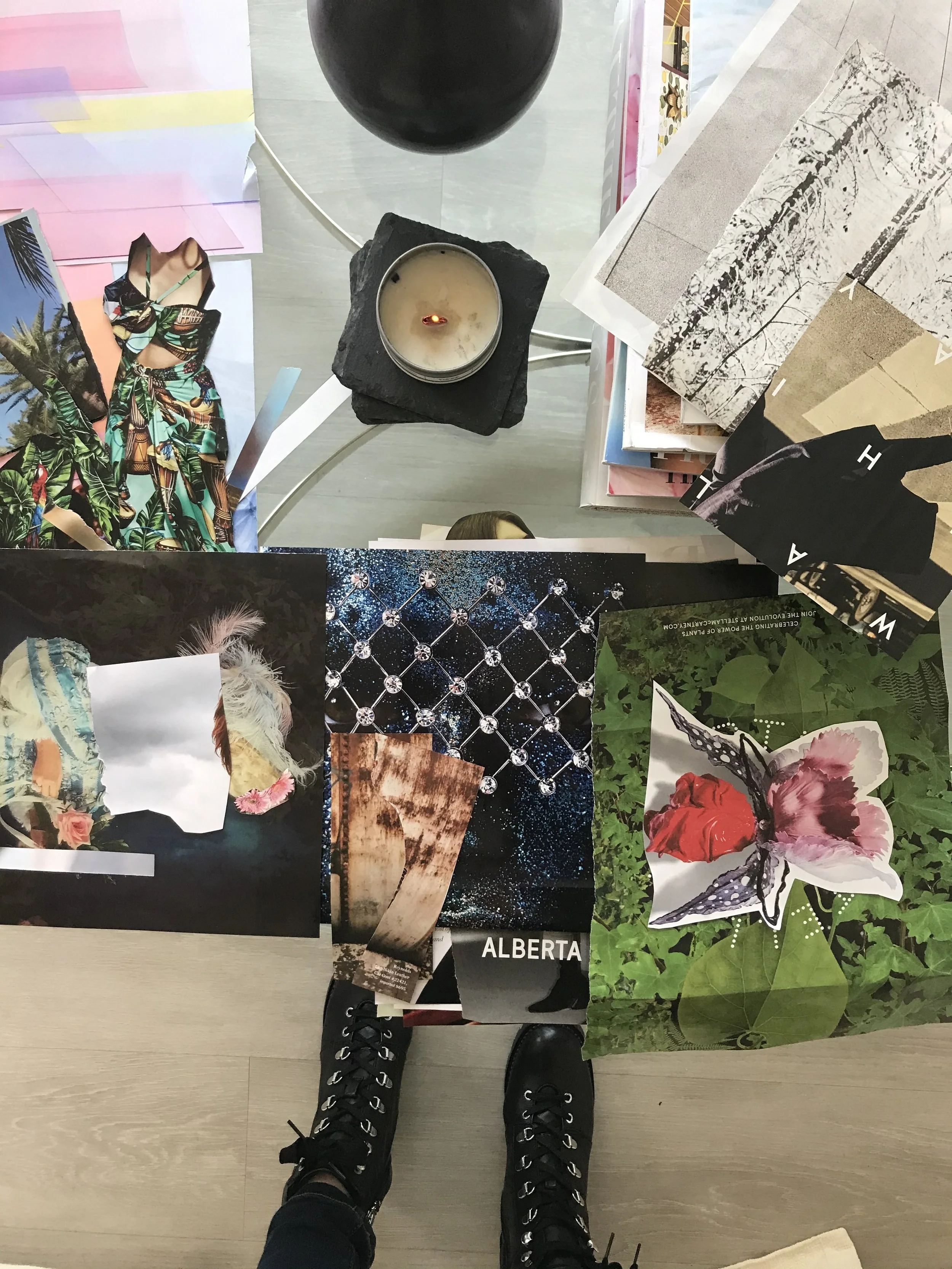
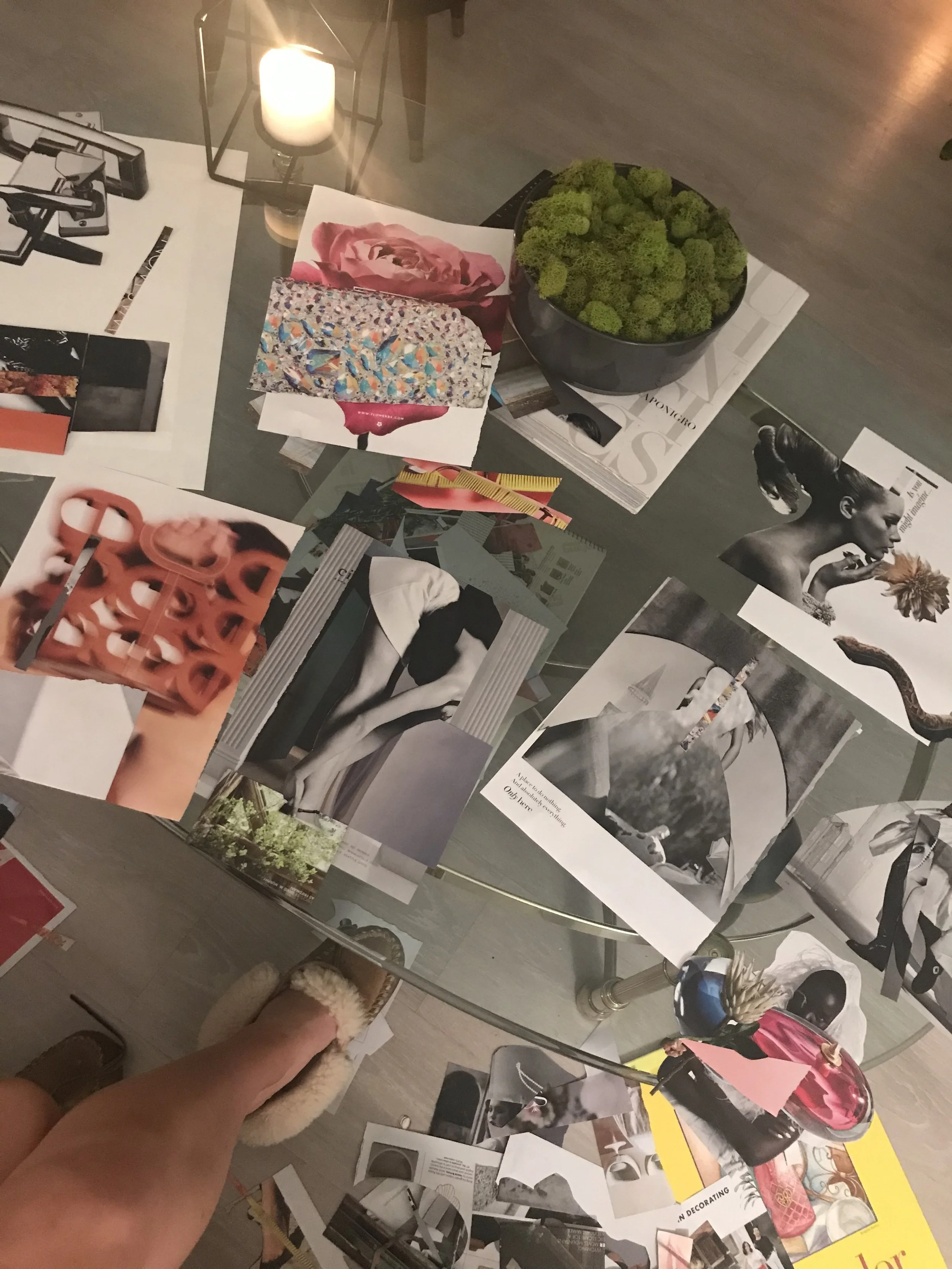
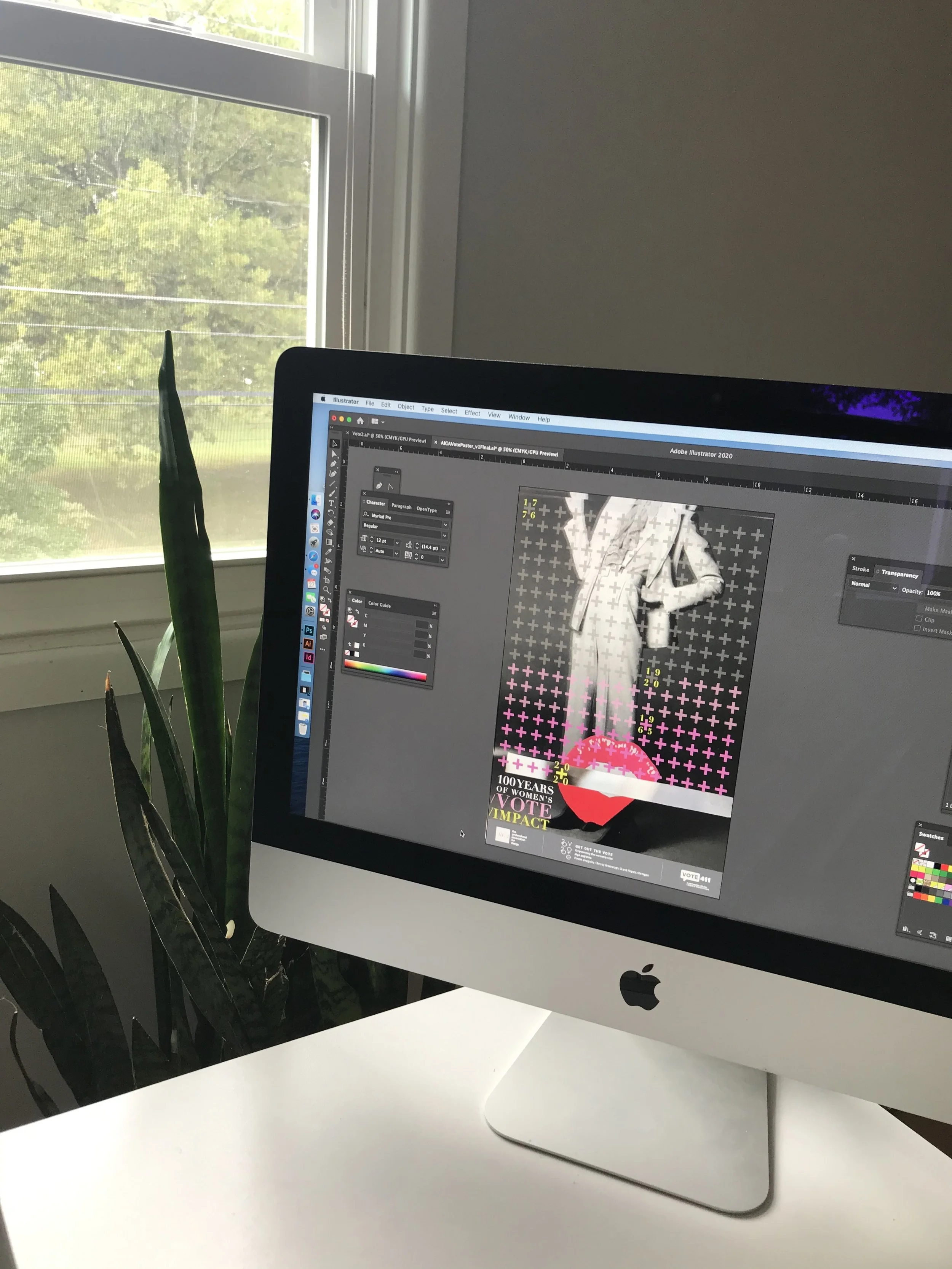
Early 2020 was, for me, a blessing because it gave me not only the time but the permission to not feel like I had to be super productive. Some picked up sourdough, and although I’m kind of jealous that’s not part of my cache of skills now, I was able to marry two hobbies I used to do growing up - reading magazines and collaging. I spent days and weeks indulging in old magazines that, yes, I had kept in a few boxes and moved with me throughout my adult life. I love photography, typography, color, layout, all the fun designer indulgences, and started tearing out pages and cutting up spreads to put back together, in a new way. These sessions sometimes lasted all day, and absolutely dropped me into this flow state when the world around was….something. About a year later, I layered phrases, letters, and digital elements over these collages in Photoshop. What I was doing seemed a little different than other collage work I’d been watching, usually more vintage and analog in style. I wanted to take the cut paper and hand-placed imagery and layer what was going on in my mind over and within them - phrases to inspire and motivate, during times of wild confusion.

The collages represent the overlapping thought patterns that can sometimes come up for all of us, impacting our mental health. These combine found imagery, photos taken on long walks during these first few years of COVID, with typography inviting closer inspection. The provocative phrases are meant to be uncovered versus obvious, and create a layered piece that presents itself slowly, over time, requiring the viewer to pause. I later turned these into stationary and tiny motivational cards. One rests on my laptop stand as I’m writing this….Good things are coming. Something I need to hear this week.

Not every piece is finished, but that just means I get to spend more time working on these. My hope is that this collage series provides tiny boosts of joy and reminds you to put the pieces of life together a little differently, and change your perspective when things get confusing. You got this!

The Millenial Approach to Business Decisions

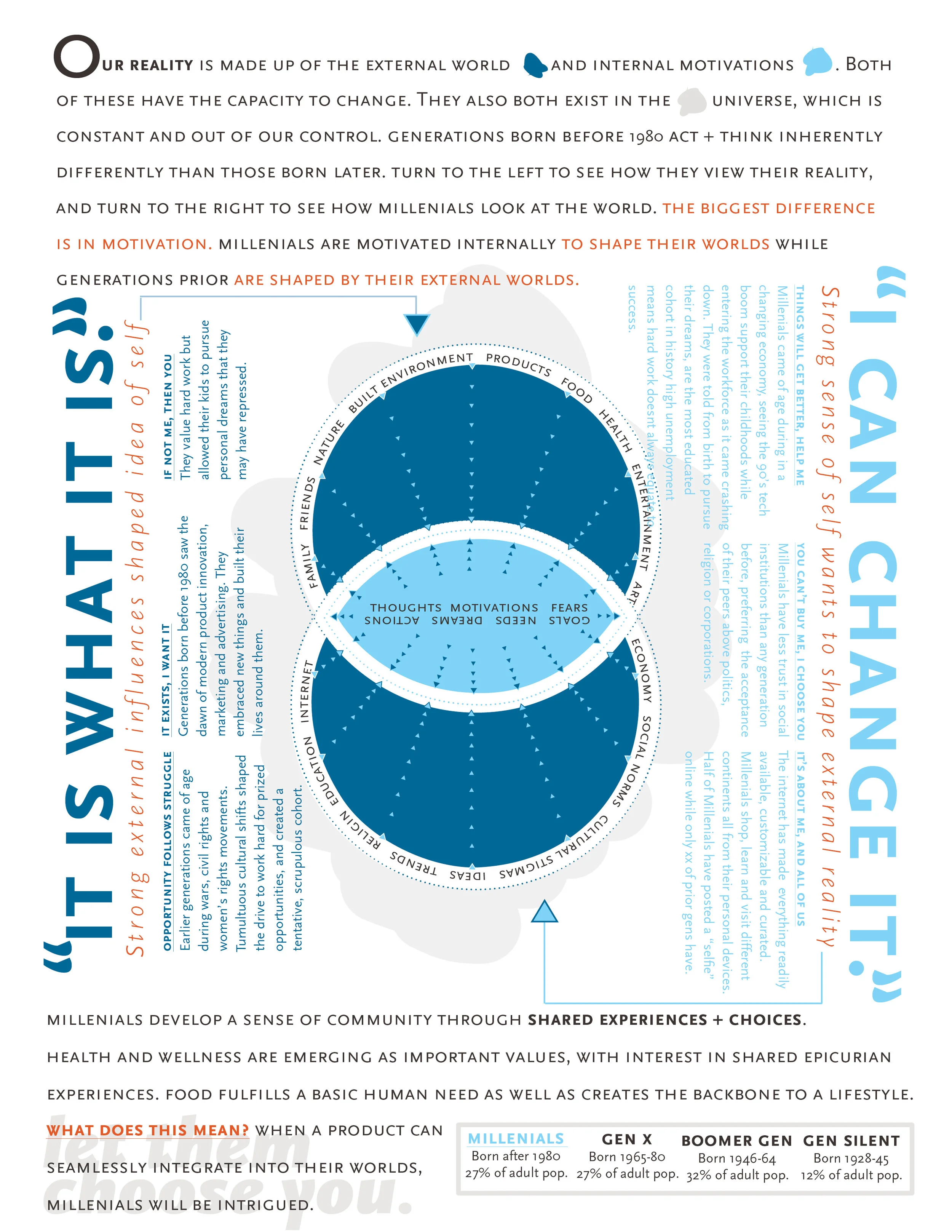
How can understanding different generations help drive business decisions and brand development? Many years ago, I was given the assignment to develop an infographic interpreting trends outlined in a Pew Research article published in 2014, discussing the differences in motivations between generations in the then-current workforce. Although outdated for current implications, it remains that executives and workforce leaders understand the styles and motivations driving the different generations in the workforce. Today’s workers span from Alpha to Boomer, with the differences even wider than this 2014 article described. The graphic here largely discusses the differences between Millenials and Gen X/Boomers. If I were to re-do this today, I’d need at least three axes, since the generation undernePew Research article published in 2014ath Millenials have brought an even wider range of talents, motivations, and influences than were present before they entered the workforce, and thus those having disposable income.

The dark blue portions of the infographic below represent the Generations born before 1980. They are, when compared to later generations, more motivated by external forces. Things like their family and friends, their built environments, the activities they take part in, the economy and social norms. These forces "push in" and drive their behaviors. It’s not that they accept whatever comes their way, but they have a reverence for the way things are, and adjust accordingly. Generations born after 1980, in light blue, are driven by internal desires, motivations and see their external world as something that is to be shaped, instead of being shaped by it. Their actions "push out" on these external forces, molding the world into their ideal visions.

What can understanding these differences do for the workforce? What happens when team members are motivated in completely opposite ways? How can these insights generate return over time for your brand? Working with and selling to Millenials, the answer seems to be, speak to their sense of self, appeal to what they value, let them choose you. For older generations, deliver a sense of purpose, a reason to show up: choose them, need them.

The graphic below isn’t a typical ‘infographic’ and wouldn’t appear in a report or academic publication. I wanted to create a designer’s interpretation of the facts presented in the article. Something that invites thought, consideration, something that could be hung over an office desk to invite further inspection. That said, viewing this almost a decade later and some glaring typographic inconsisentcies are jumping out to me. In the last decade I’ve honed both my research skills and my typography taste, I guess. I still enjoy looking at this, as a different way of looking at data - circular, balanced, and as a visual story.

Design Thinking and Healthcare

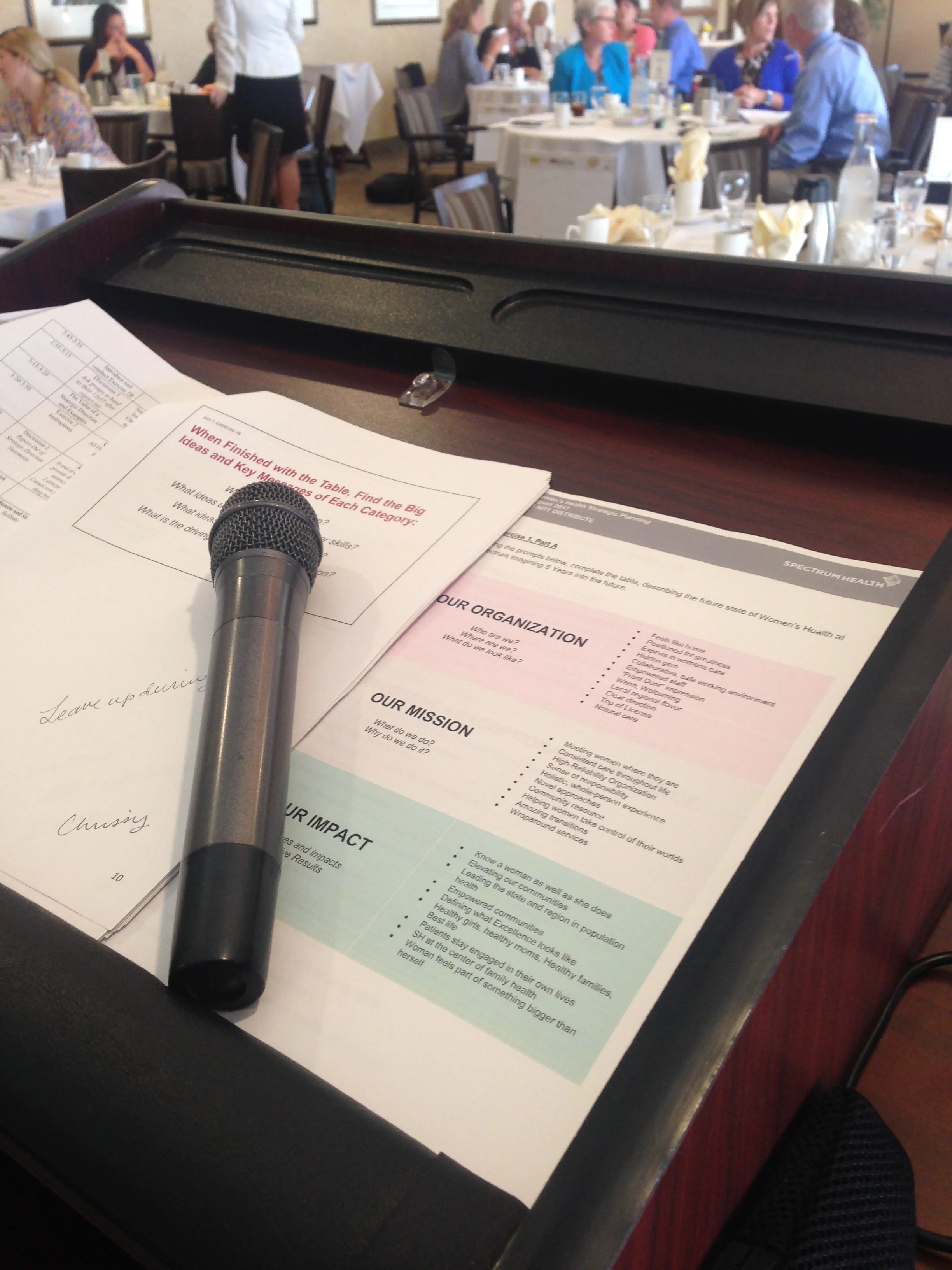
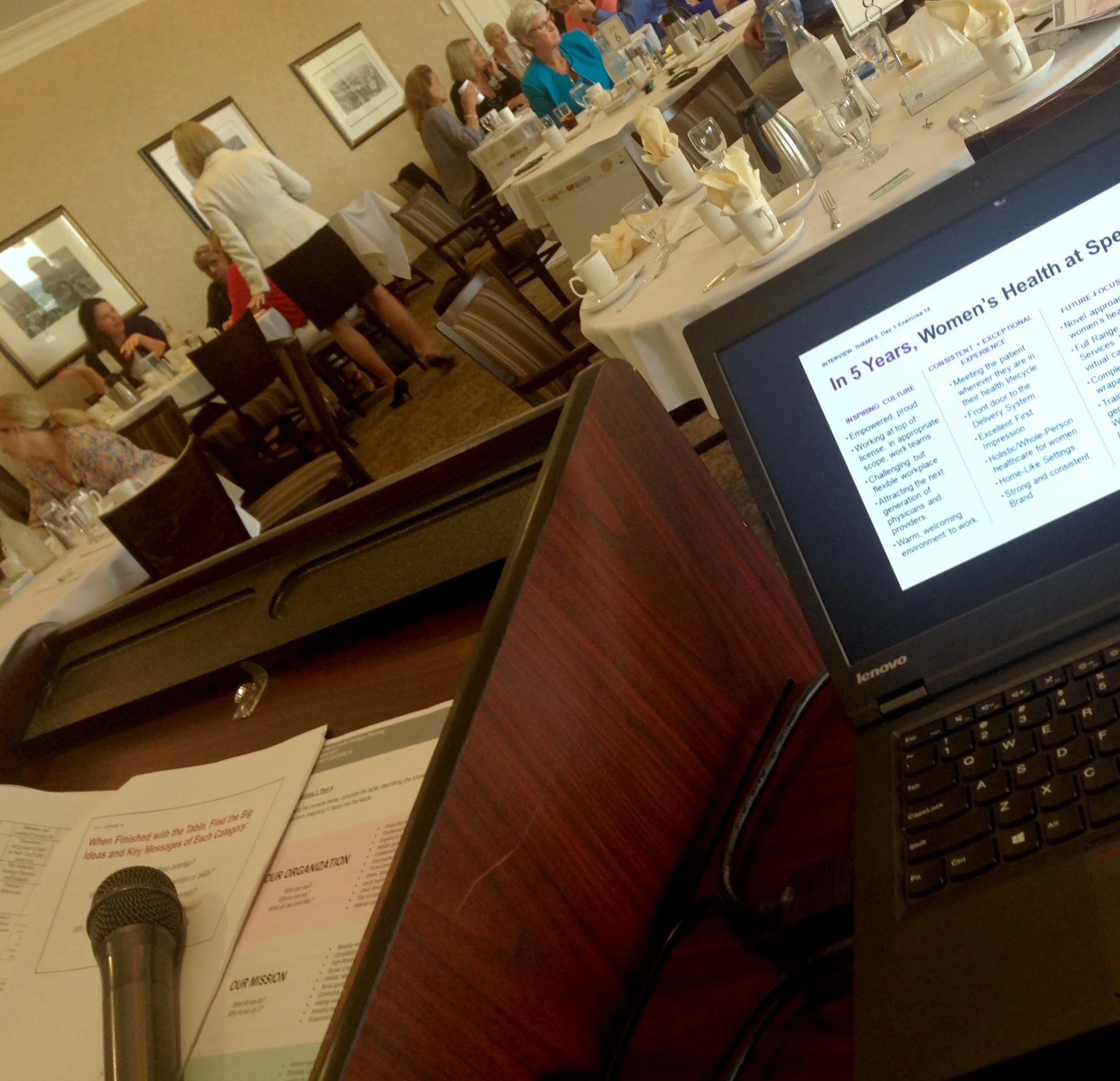
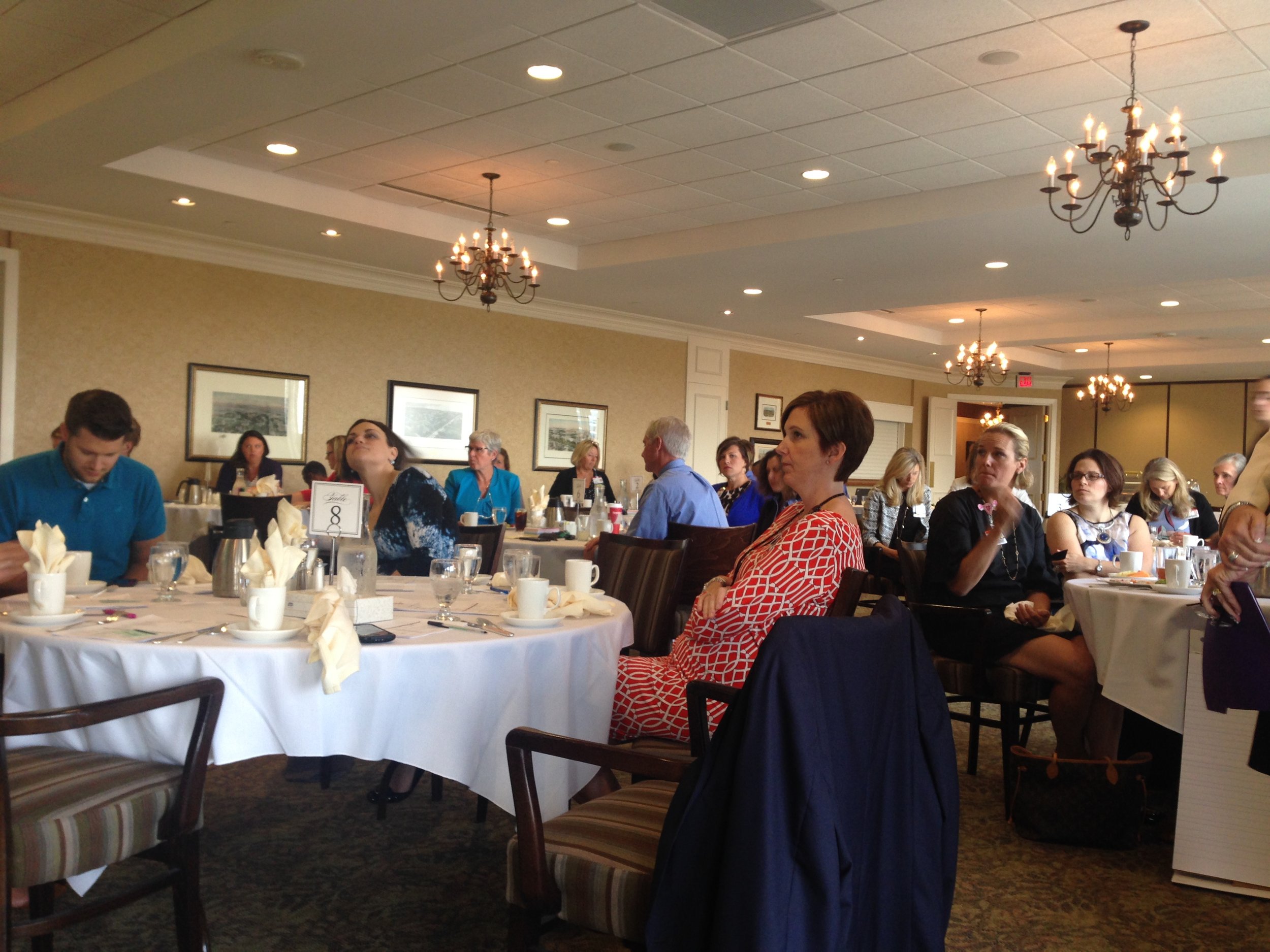
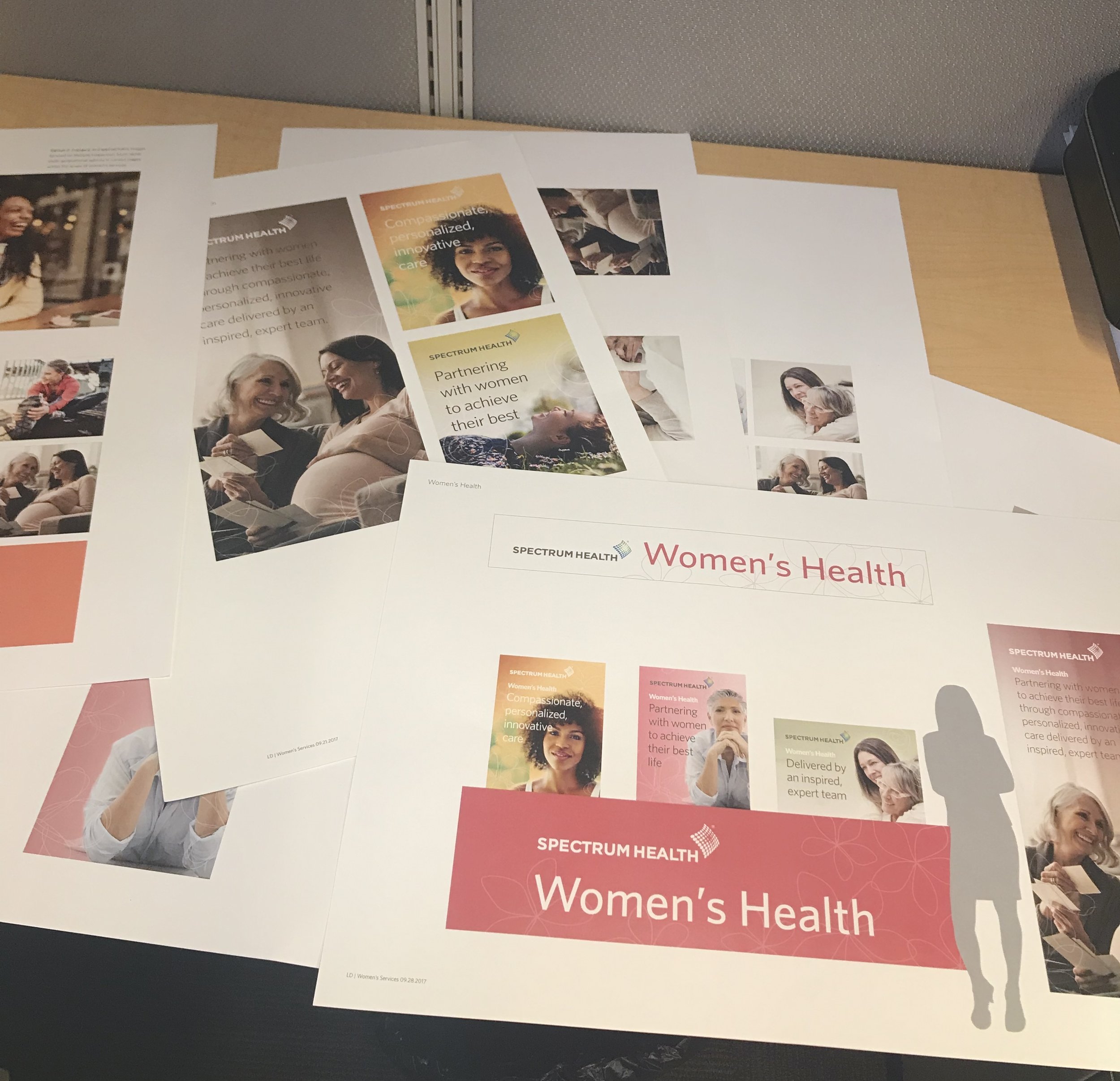
A few years ago, I worked with the Women's Health service line of a hospital system to define their strategic direction–a strategy statement, Vision, and set of guiding principles in line with their long-standing Mission as part of a large, regional integrated health system. Women's Health is a key service for many reasons, and the group had achieved success as a provider of healthcare services for women as they progressed along the continuum of care - for women that’s typically measured by phase of life (age). This particular hospital system had excellent statewide and regional performance and outcomes for Maternity care, including pre- and postpartum. The clinicians and leaders were proud of this and were looking for the next set of strategies to set their sights and goals. A clear direction would help grow their services, unite the employees and physicians and signal their commitment to continued excellence in a market that was becoming increasingly competitive in this specialty.

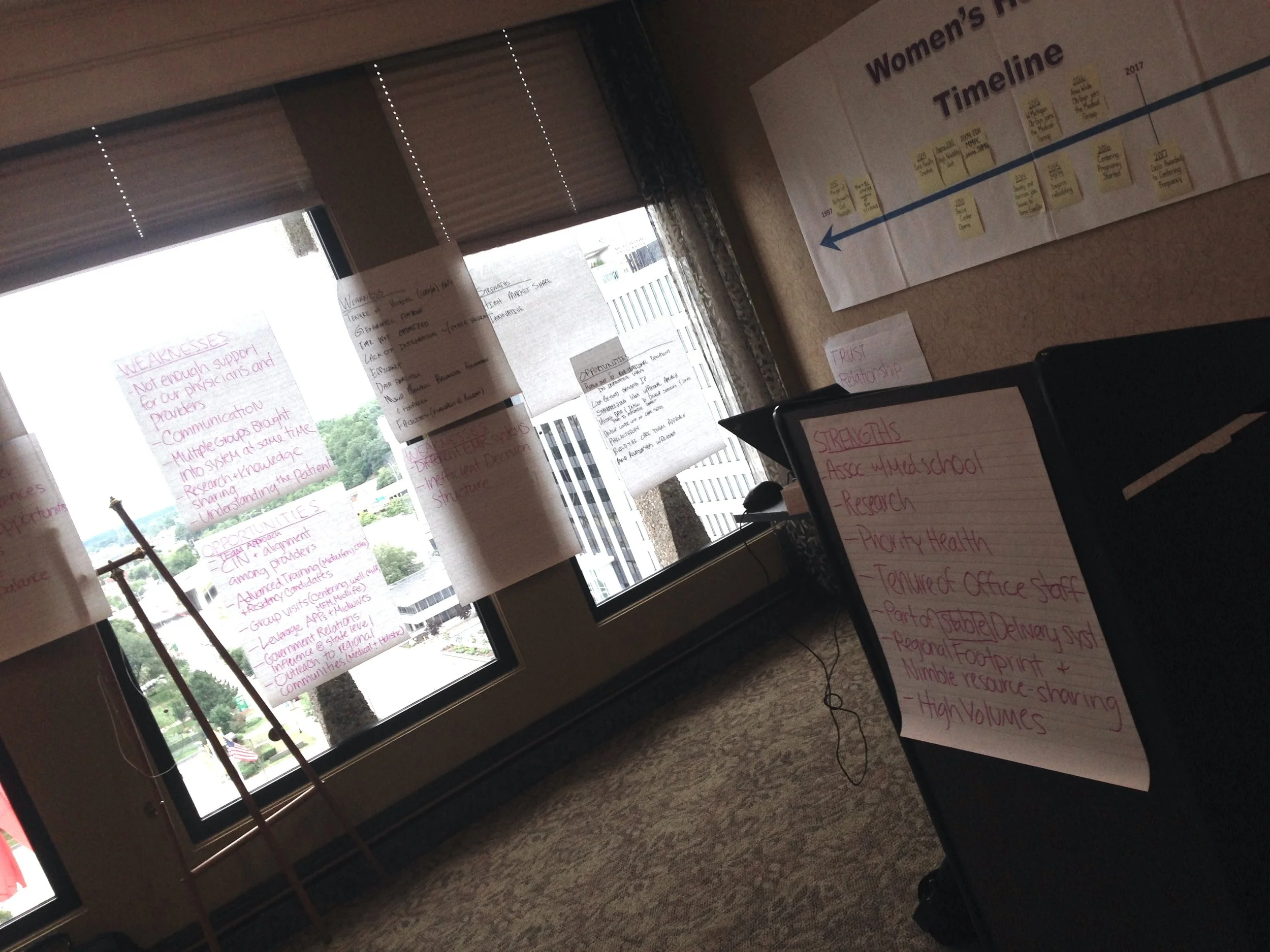
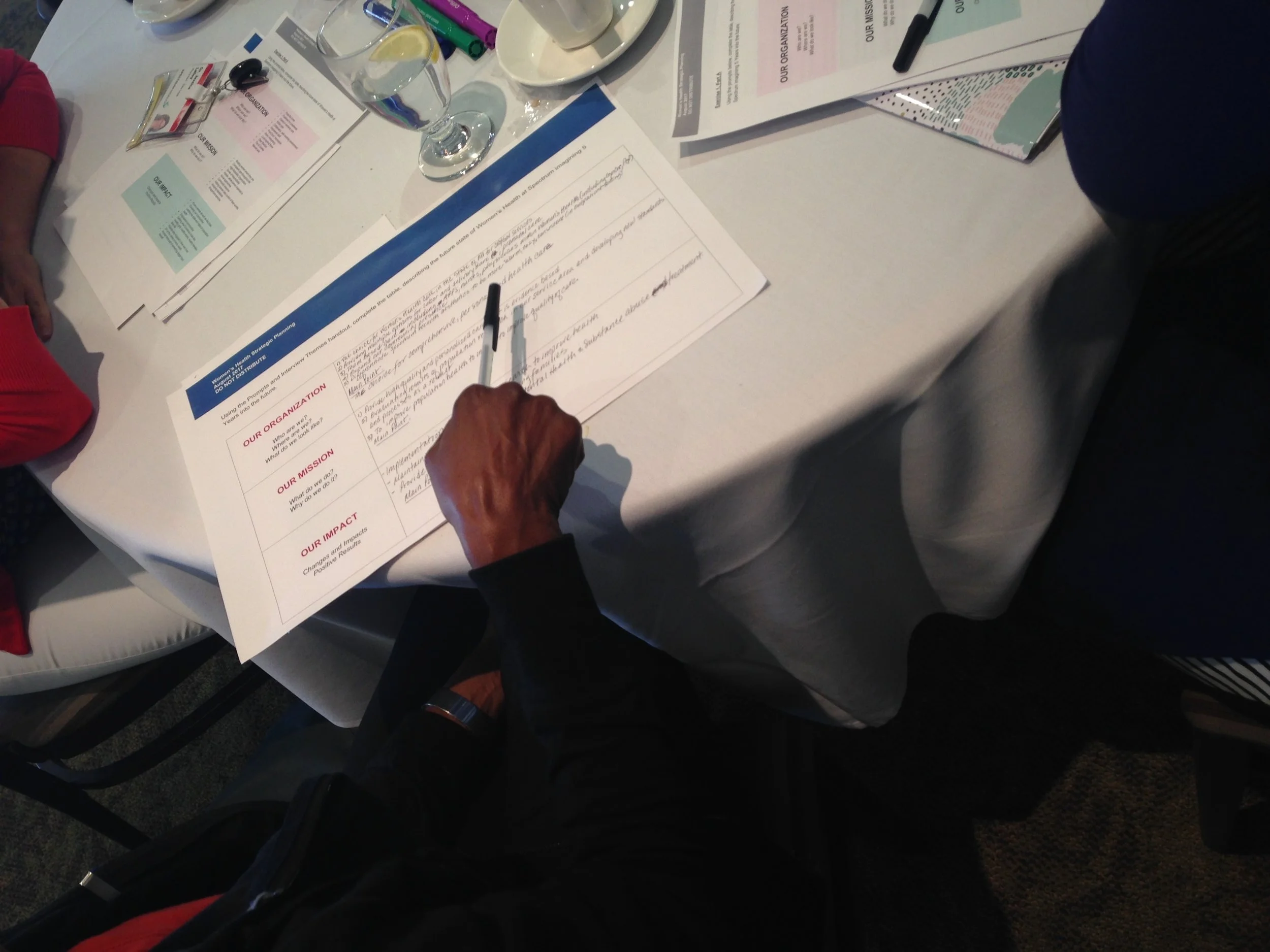
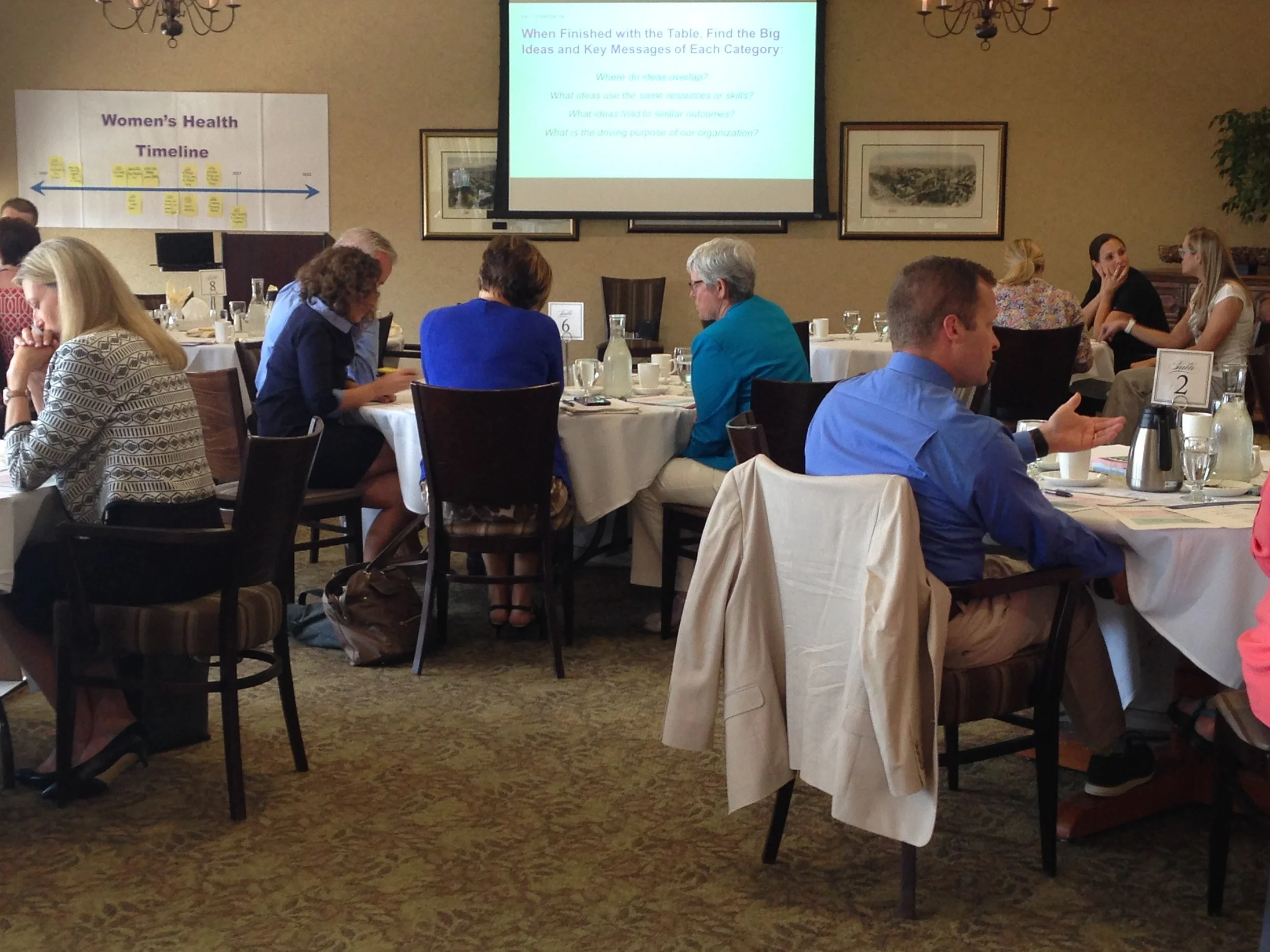
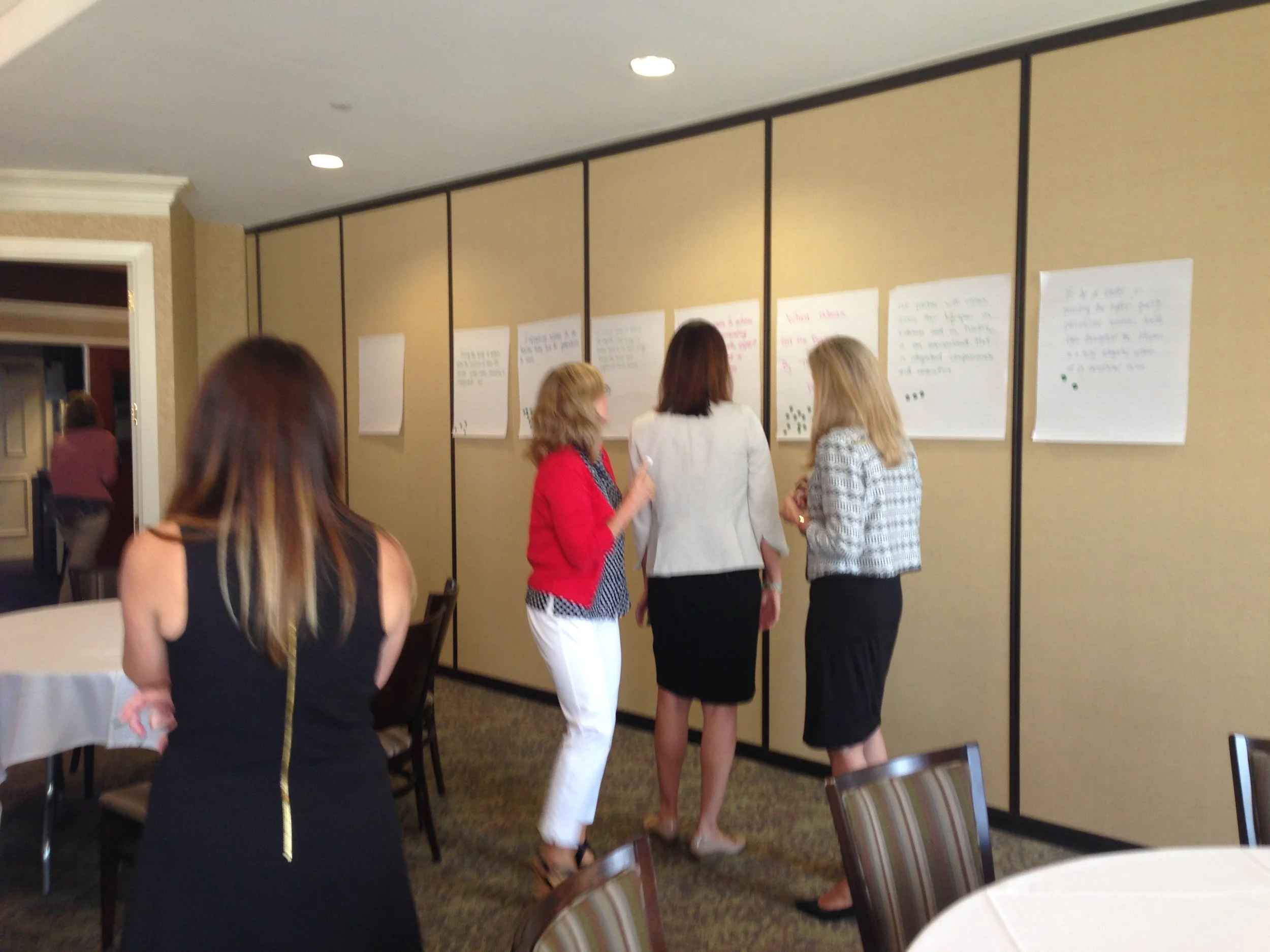
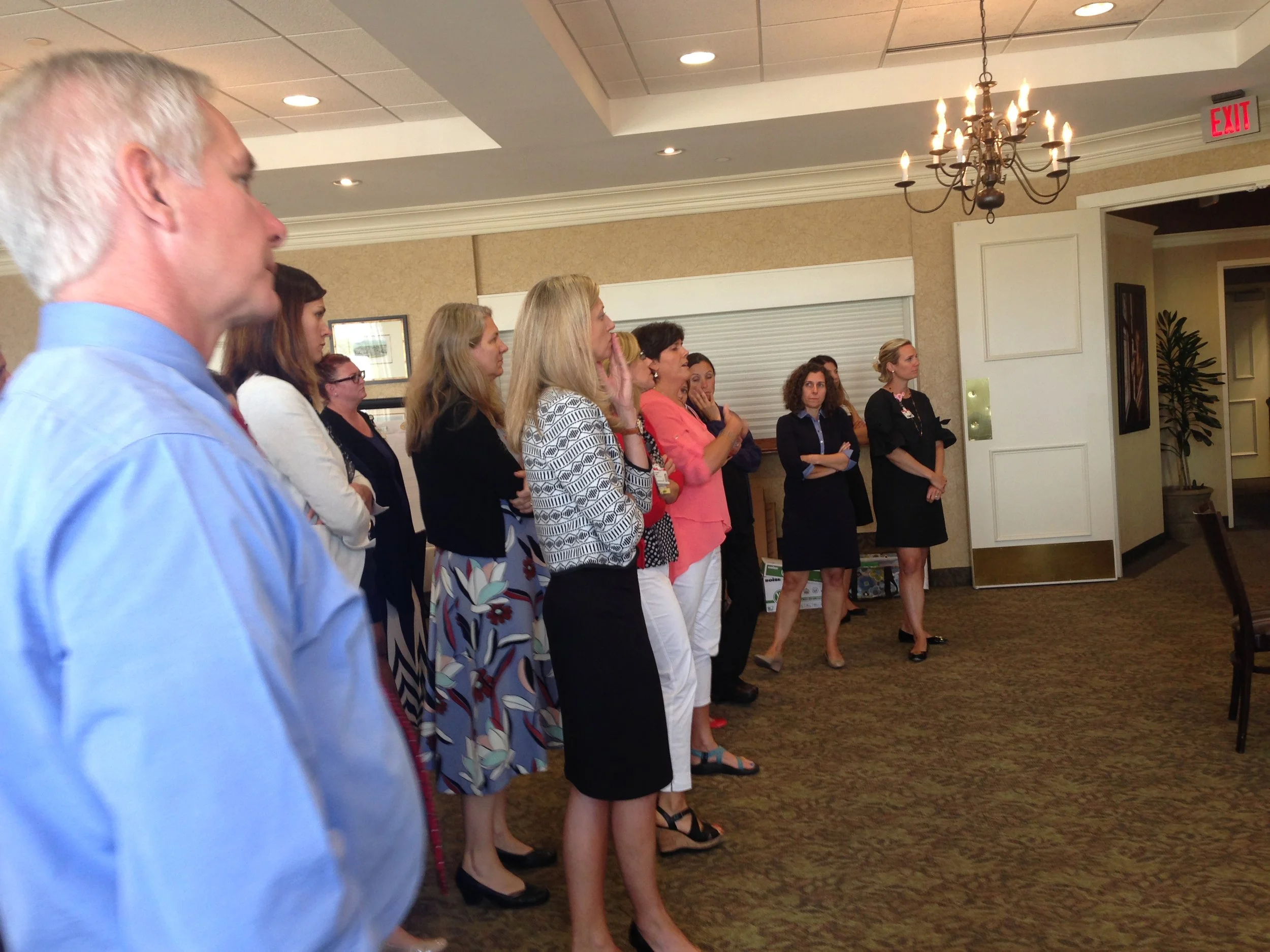
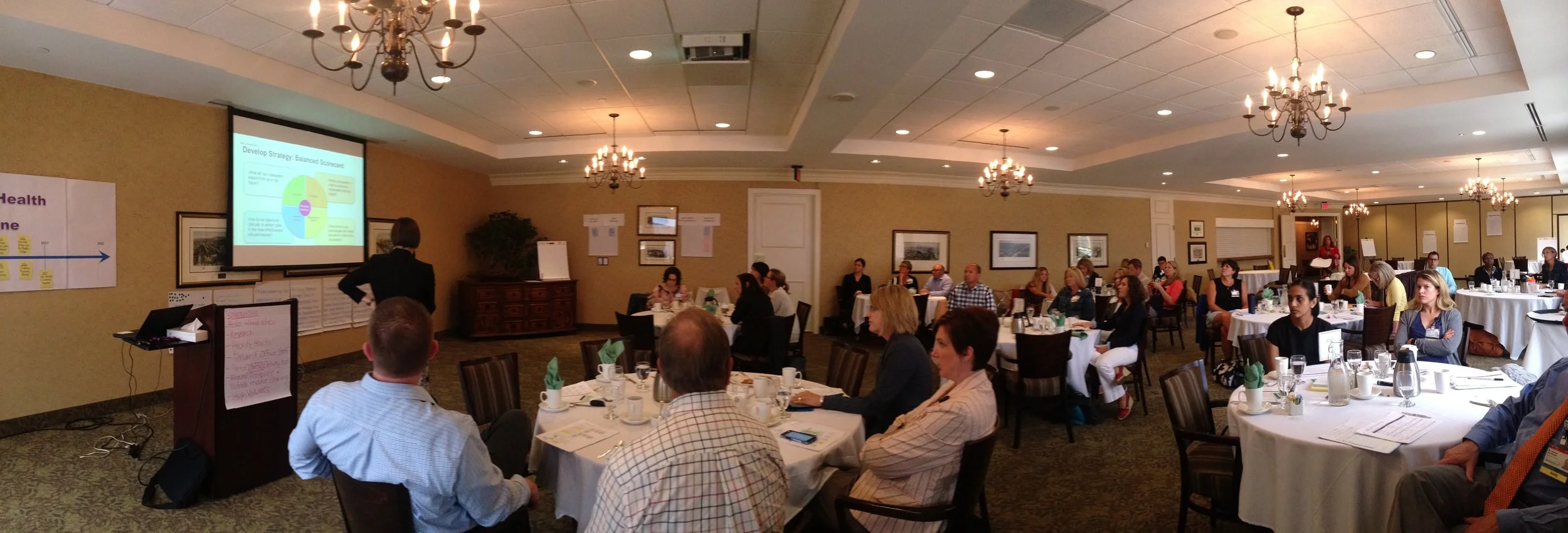
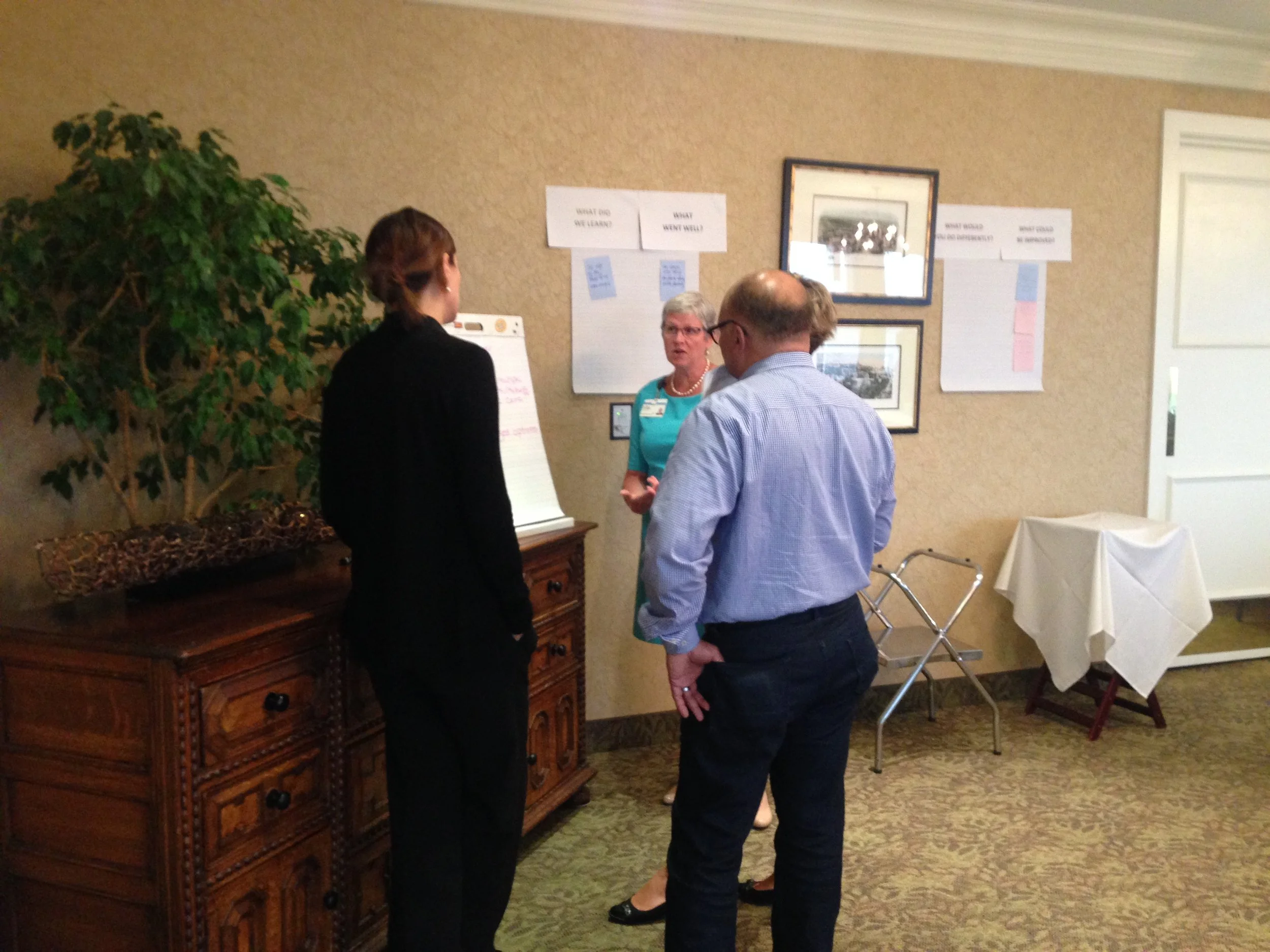
I worked in the corporate strategy office at this health system, aside an extremely smart team focused on market growth, finance, business development, and strategic planning. I was able to marry my background in strategy, consulting, and design to contribute to the work our team performed, and for this retreat ended up designing a set of visioning exercises as well as prioritization exercises for identifying which key strategies would most impact the vision and direction of this group of clinicians and leaders. Pre-work consisted of empathy interviews aimed at uncovering core issues and common themes, which would form the foundation for the two-day offsite strategy session. Around 50 clinicians and business leaders came together to level-set on their current state and were walked through a structured, collaborative thought process to uncover and align around a future vision.

The work done during this project became a vision statement and set of ten strategic priorities, many of which years later still inform the strategic plan and related priorities. My role was as a designer and facilitator of retreat sessions, materials, takeaways and directing the next stage of strategy work. This type of collaborative process was new for the organization, and could have easily  been replaced with a series of smaller, business-focused meetings, but bringing a mix of clinical and administrative leadership together, without distractions, was invaluable and helped develop the working relationships needed to continue pushing these efforts forward.

As a designer and strategist, this hit all the sweet spots–seeing groups come together to collaborate and ideate, deep-diving into particular topics, designing a thoughtful way to walk groups through complex ideas, and storytelling to advance the ideas into actionable insights and takeaways.