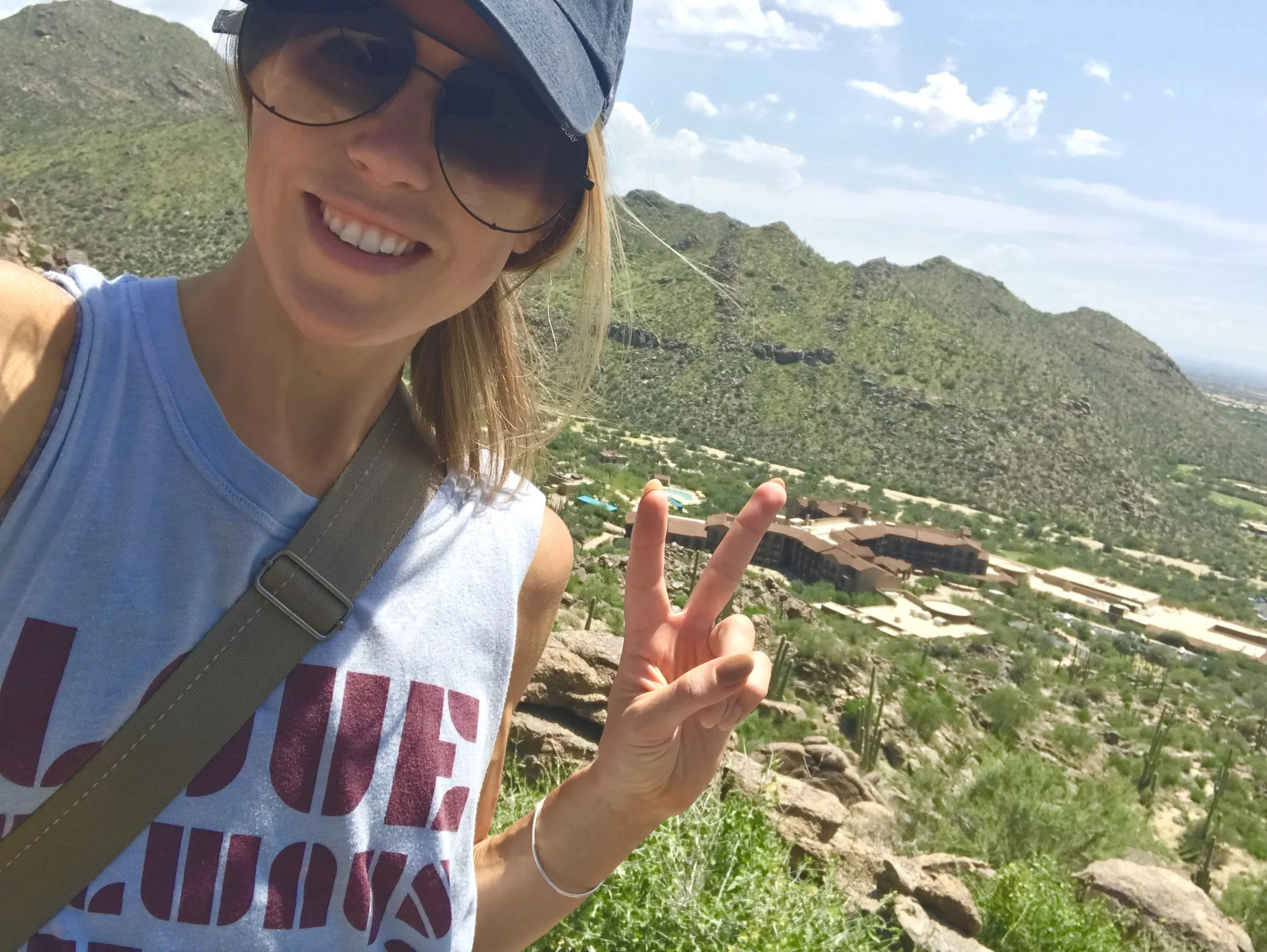
Five years ago I found myself on a literal (very small) mountain in Tucson in August. Setting aside the fact that nobody should be in Arizona in August, the trip reminded me that spontaneity really does pay off, and if you pay attention the universe hands you small surprises all the time.
It was morning, the only time of day even remotely OK to be outside, and I decided to hike up a small mountain behind the resort where I was staying. Very close to the top turnaround point, I passed a woman sitting underneath one of the only trees out there. She was traveling from the East Coast with her husband who was attending a conference at the resort, and she had the same idea as I did, get outside before the sun took you out.
I learned that she worked in the space that I had thought I’d find myself one day, as I was a 26-year old researching grad school programs over a decade earlier. She sat on the Board of NOAH, The National Organization for Arts in Health, and worked professionally to manage a hospital arts program on the East Cost. We sat in the shade exchanging ideas and experiences of our respective career paths. I never went down the professional path of art therapist, or arts programming in healthcare, but it’s an area that I continue to appreciate and follow, and plan to stay closely connected to.
NOAH’s mission is important one: To build community amplify, educate about, and advocate for the power of the arts to improve health and wellbeing for all people. They centralize and advance the development of arts in health through training, resources, and connection. Lots of times arts programs can be a bit chaotic, built on endowments, funds and volutneers, with lots of starts and stops just given competing priorities for healthcare organizations. Having a group to centralize best practices can be the difference when a healthcare facility has the opportunity to accept artwork, art therapy, or any of the many ways the arts can support healing, but doesn’t have expertise in-house to make it happen. The research they conduct also provide much-needed weight when these programs exist in the data-driven world that is decision-making in healthcare, and can be the difference about whether a program continues to be funded, or a new wellness space comes to life.
I have been a member of NOAH ever since, keeping up with their initiatives and programs. It’s also taken me down the path of related opportunities and groups: Michigan Central in Detroit, MATTER Health in Chicago, both not directly arts-focused, but which work in the healthcare space to bring ideas and creative vision to life. Discovering groups like these has given me a community in the healthcare operations career path, and a chance to feel connected to likeminded professionals. And I’ve learned that in the healthcare and health management space, I am sometimes the sole ‘creative’ at the table, influencing forward motion. And while it’s not as literal as bringing physical art into these spaces, the ability to fluidly move between concepts, connect ideas, introduce alternative solutions has been a role I’ve played many times with colleague groups. Finding these communities makes me feel less ‘awkward’ or different, and comfortable knowing that I have spaces to go for resources, events, and likeminded connections.
I haven’t been back to Tucson since, and likely won’t ever go again in August, but that hike was worth the connection made and most importantly, served as a sign to continue following small nudges. It took a lot of very spontaneous, very strange decisions that even led me to be in Arizona that weekend, let alone on that mountain. But somehow under the shade of a small tree, in the middle of August Arizona heat, two arts in health advocates found themselves killing time at a finance conference and ended up in the same spot, chatting healthcare and arts programming. On the surface nothing looked different after this experience, but it did serve as a reminder that the world really does wink at you if you pay attention.